Risk management is a critical issue for any organization, whether businesses, local authorities, or public administrations.
In an increasingly uncertain, fast-changing, and competitive environment, organizations must carry out major initiatives that enable them to anticipate and respond to feared events in order to ensure their long-term viability.
In this context, what are the different steps and methods for implementing effective risk management? What are the benefits of high-performing risk management?
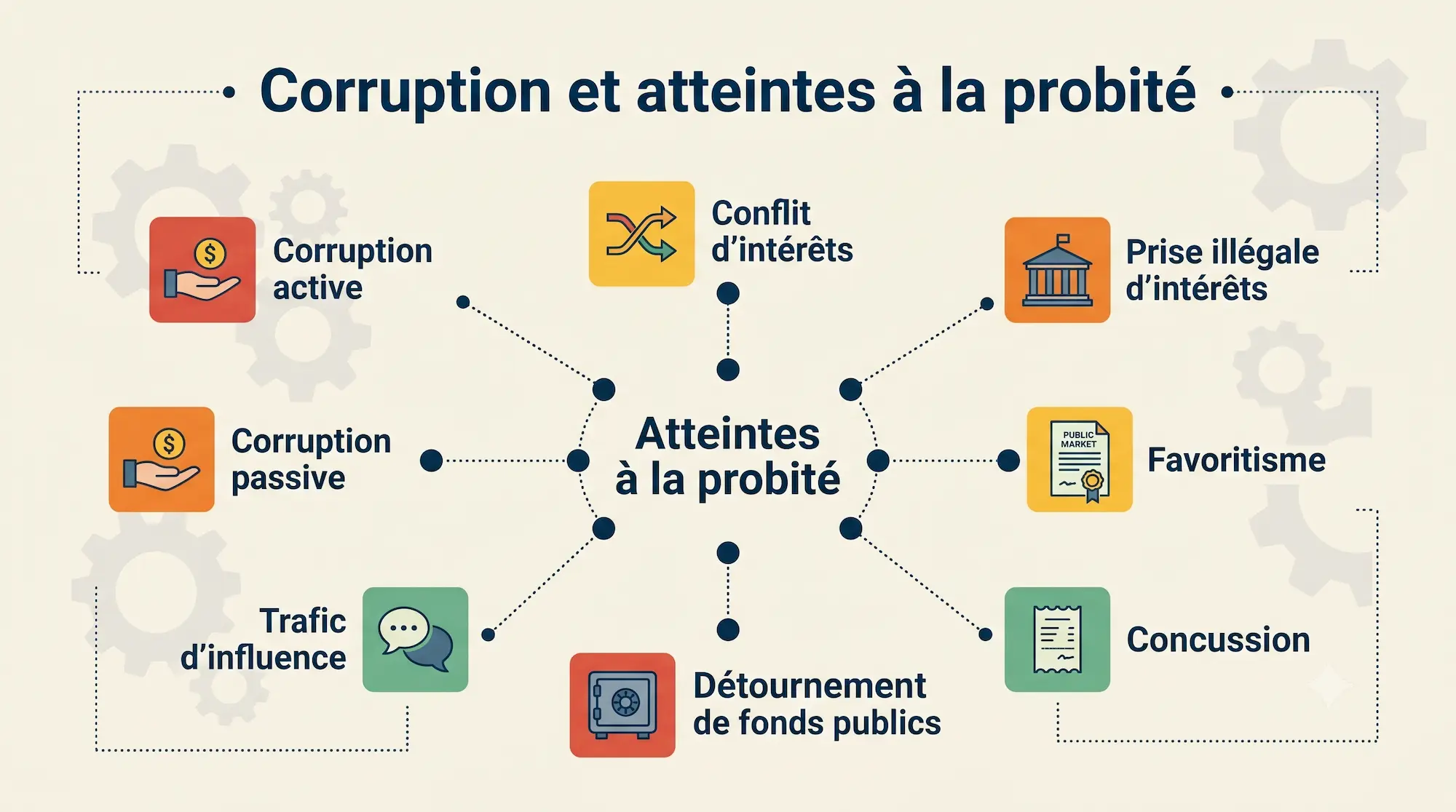
It is common practice to categorize an organization’s risks around the following main risk types:
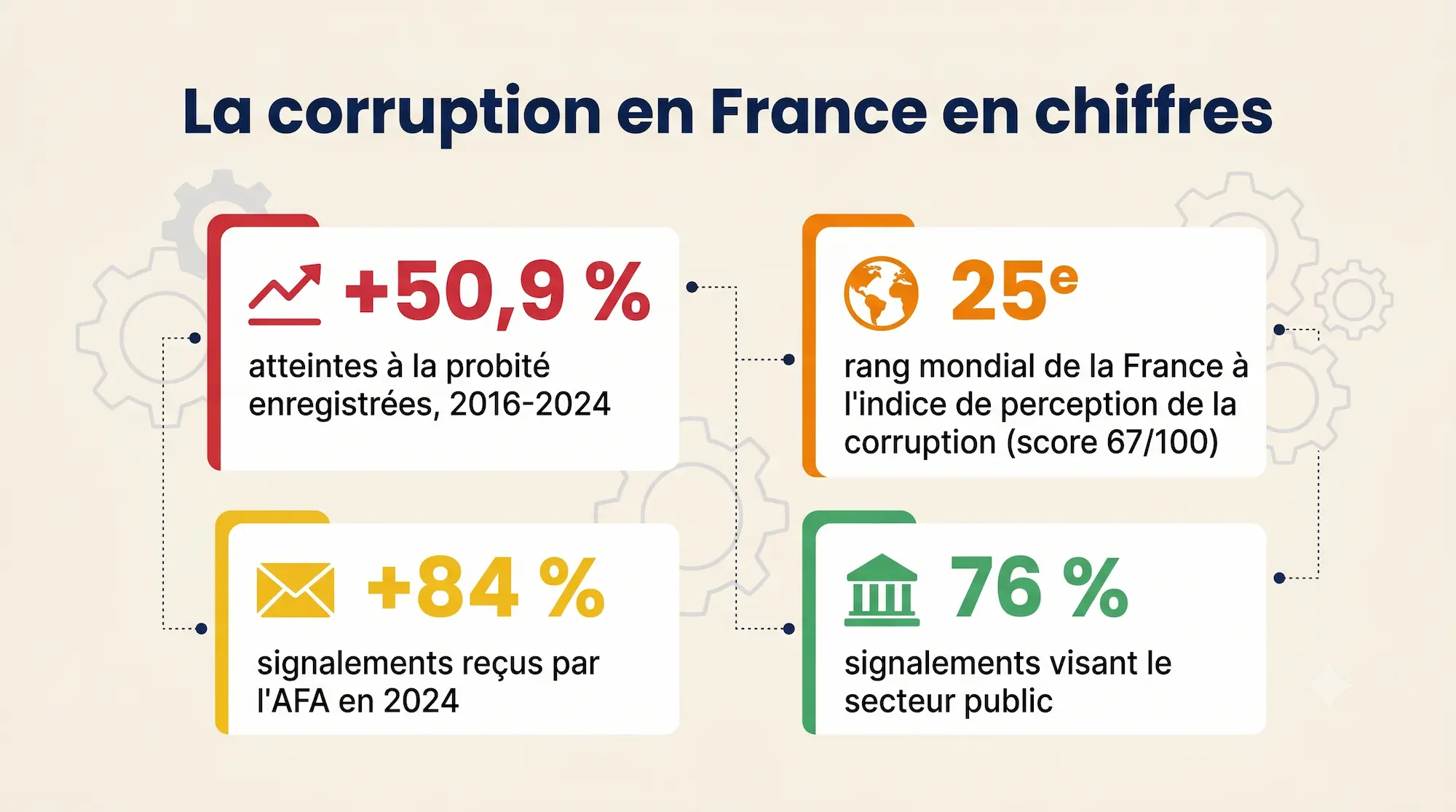
Le risque de corruption progresse, et les chiffres officiels le confirment.
Les infractions pour atteinte à la probité enregistrées en France ont augmenté de 50,9 % entre 2016 et 2024 (Interstats, ministère de l’Intérieur). En 2024, les signalements reçus par l’Agence française anticorruption ont presque doublé, passant de 435 en 2023 à 802, soit une hausse de 84 % (rapport annuel AFA 2024).
La perception suit la même pente : 70 % des citoyens européens estiment que la corruption est répandue dans leur pays (Eurobaromètre spécial sur la corruption, 2023), et la France a reculé de cinq places au classement de Transparency International, à la 25e position mondiale avec un score de 67 sur 100 (IPC 2024).
Le secteur public est en première ligne : 76 % des signalements reçus par l’AFA en 2024 concernent le secteur public, principalement les collectivités locales (AFA 2024).
Un retard structurel :
dans son rapport de décembre 2025, la Cour des Comptes pointe les faiblesses persistantes du dispositif national de lutte contre la corruption.
Pour mesurer ce que cela recouvre concrètement, voir nos exemples de corruption.
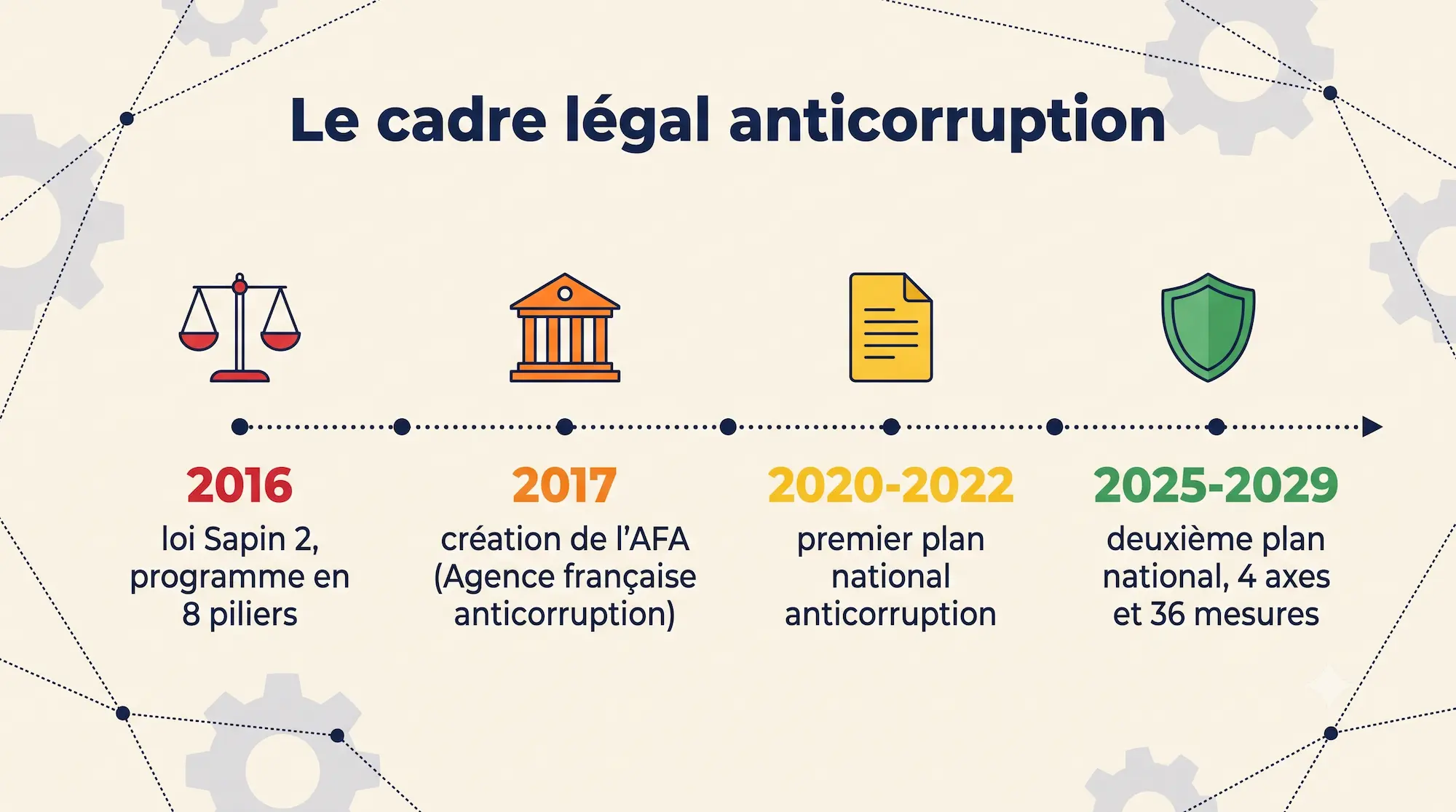
En France, la loi Sapin 2 du 9 décembre 2016 constitue le socle. Son article 17 impose un programme anticorruption structuré en 8 piliers aux entreprises et établissements publics d’au moins 500 salariés réalisant plus de 100 millions d’euros de chiffre d’affaires.
Le Plan National de Lutte contre la Corruption 2025-2029, publié le 14 novembre 2025, prolonge cette dynamique avec 4 axes et 36 mesures. Il met l’accent sur le secteur public, la dimension internationale et l’extension de la vigilance aux PME, aux ETI et aux petites collectivités.
L’Agence française anticorruption (AFA) joue un triple rôle : elle accompagne les organisations, contrôle leurs dispositifs et peut proposer des sanctions.
Point essentiel : même les organisations non assujetties à Sapin 2 sont concernées par le Plan National 2025-2029, en particulier les PME, les ETI et les collectivités. Le détail des obligations est traité dans notre dossier cadre légal anticorruption. Sur les sanctions encourues, voir les sanctions en cas de non-respect de Sapin 2.
Risk management is an approach that enables businesses and public-sector stakeholders to identify, analyze, and assess, then control potential risks that may impact their objectives and strategy. It is a proactive approach aimed at minimizing the negative consequences of events that may occur.
The first step is to identify the risks likely to affect the organization. This involves a thorough analysis of the organization’s activities, processes, and external environment.
It is important to identify both internal and external risks. The approach generally relies on interviews, workshops involving the various stakeholders, brainstorming sessions, internal or external audits that have been carried out, as well as feedback and lessons learned.
The objective is to obtain a comprehensive view of potential risks. The identified risks are classified by type (financial, operational, strategic, etc.).
Once risks have been identified, the work carried out will make it possible to assess their likelihood of occurrence as well as their potential impact on the business or public-sector stakeholder.
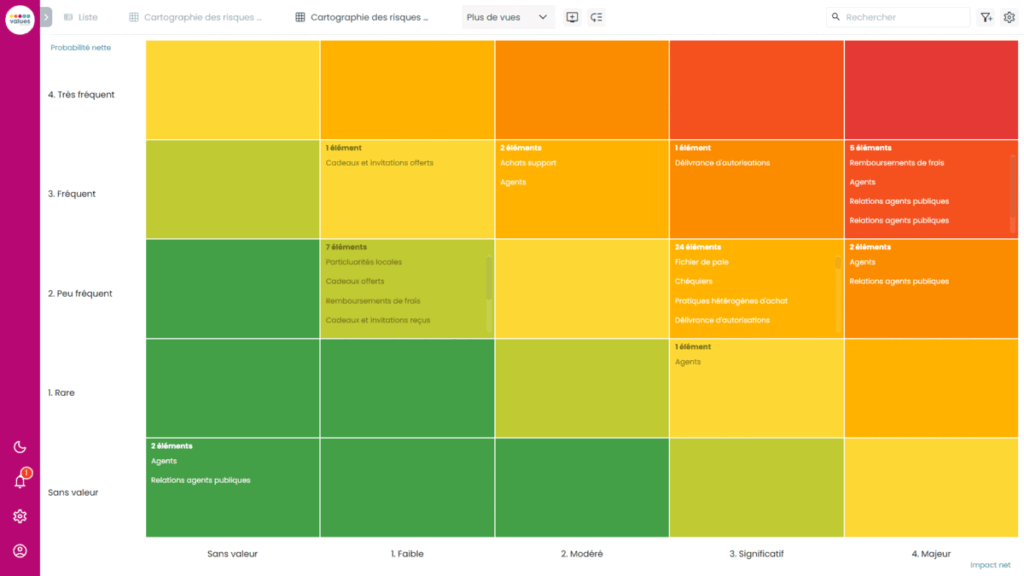
It is common to formalize this step using visual probability and impact matrices, first assessing the inherent risk, without taking mitigation actions into account, then the residual risk after assessing the impact of existing mitigation actions.
Each risk is then assigned a score combining its likelihood of occurrence and the severity of its consequences. This risk assessment makes it possible to prioritize the actions to be undertaken.
After the assessment, the next step is to develop strategies to control risks. These strategies may include, in particular, risk avoidance, reduction, sharing, or acceptance.
For example, diversifying suppliers can reduce supply risk, while taking out insurance will transfer financial risk to a third party. The choice of strategies takes into account the specific objectives and resources of the organization.
Risk management is not a fixed process. It requires regular monitoring to ensure the effectiveness of the measures put in place, in particular through the internal control implemented within the organization. This regular monitoring most often includes compliance audits and performance reviews, enabling regular updates to risk analyses.
The objective is to detect gaps and adjust strategies in line with changes in the internal or external environment and newly identified threats.
La construction pas à pas du dispositif est détaillée dans notre dossier programme anticorruption.
Involving all employees is essential for successful risk management. Awareness and training help develop a culture of safety and risk prevention. Best practices include organizing regular training sessions, implementing clear procedures, and ensuring that everyone clearly understands their role in the risk management framework.
The business or public-sector stakeholder must establish clear risk management policies. These policies define responsibilities, procedures, and the tools to be used for risk identification, assessment, and control. They also provide reporting mechanisms and performance indicators to measure the effectiveness of the actions taken.
Technology plays an increasingly decisive role in risk management. Specialized risk management software makes it possible to collect and centralize data, automate analyses, and facilitate risk monitoring across the various stages of the framework implemented.
A key challenge is to facilitate the involvement of the various stakeholders. Ease of use and collaborative working capabilities are therefore central. Real-time reporting features, in a dynamic and interactive format, improve the organization’s communication and responsiveness.
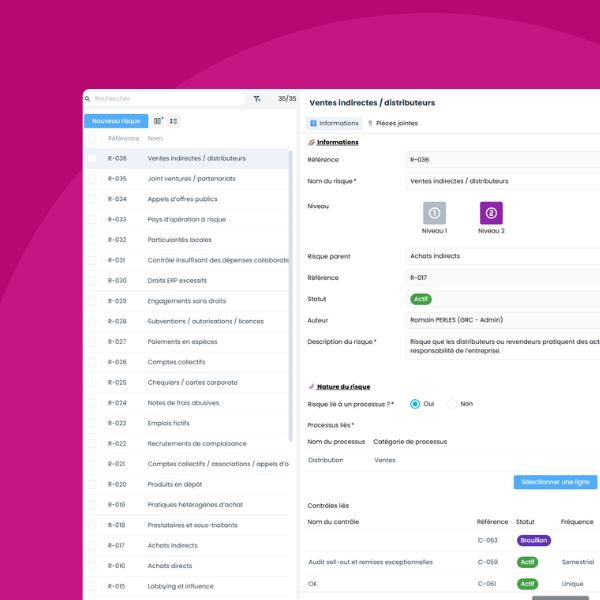
Integrating risk management into governance strengthens the entire organization and fosters a culture of prevention and safety. Case studies and feedback show that, regardless of the sector or the nature of the risks, a systematic and proactive approach delivers results.
Professionals, it is your turn: adopt and equip your risk management practices and framework to ensure the long-term viability and growth of your projects and your organization. Using digital tools, such as those we offer, not only significantly reduces time-consuming tasks but also facilitates the engagement of the various stakeholders. Reporting features simplify the management of the work carried out and support internal communication.
Values Associates has developed risk management software for businesses and public-sector stakeholders.
Discover our software and request a demo.
Risk management involves identifying, assessing, and prioritizing the potential risks an organization may face, then implementing measures to minimize or manage the impact of those risks. This includes developing strategies to prevent risks, mitigate them, or respond to them effectively.
Managing risks is crucial. It helps protect assets, trust, reputation, and business continuity. Effective risk management helps anticipate potential difficulties, reduce disruptions, and seize opportunities in an informed manner. Ultimately, it contributes to the organization’s resilience and sustainability.
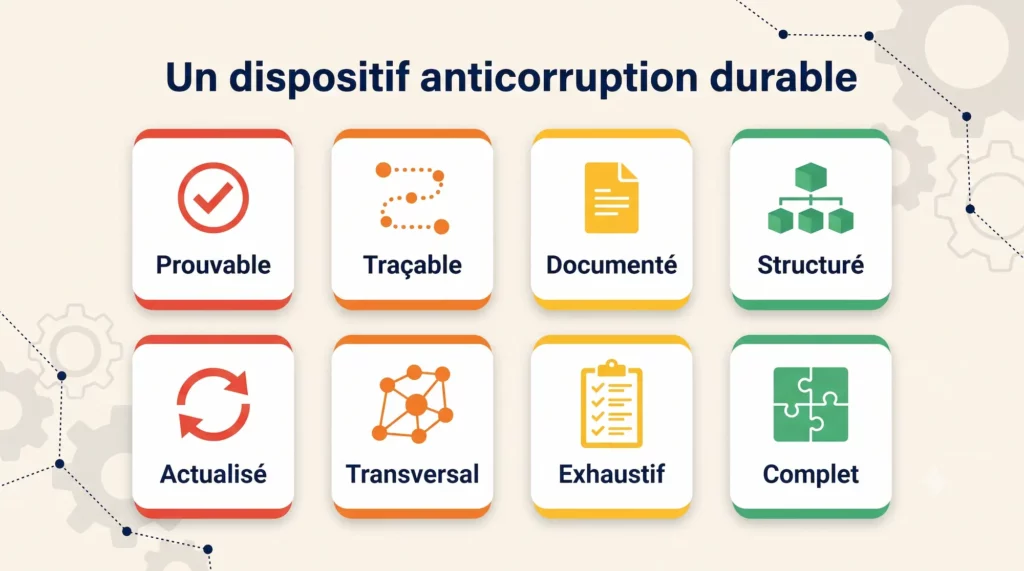
Un programme efficace repose sur 8 piliers : code de conduite, dispositif d’alerte, cartographie des risques, évaluation des tiers, contrôles comptables, formation, régime disciplinaire et contrôle interne. La digitalisation des outils renforce la traçabilité et la démonstration de la conformité.
La digitalisation permet de passer d’une conformité sur le papier à une conformité prouvable et traçable. Elle centralise les données, automatise les mises à jour, sécurise les preuves en cas de contrôle AFA et donne une vision pilotable en temps réel du dispositif.