
Defined by the 2013 law on transparency in public life, a conflict of interest refers to any situation in which “a public interest and public or private interests” interfere with one another and “influence—or appear to influence—the independent, impartial and objective exercise of a function.”
More broadly, a conflict of interest concerns any situation in which interests may come into conflict, whether public or private. Given the many ties between public and private organizations, as well as the many connections maintained by an individual, the risks of conflicts of interest are high.
Here are a few examples of real-life conflicts of interest in business, local authorities and public administration to help identify and prevent them more effectively.

All activities and roles within a company may give rise to a conflict of interest. Every executive or employee maintains relationships with individuals and companies—whether family, friendly, professional, financial or associative. The French Anti-Corruption Agency (AFA) guide on preventing conflicts of interest in business contains many practical illustrations.
The procurement function is one of the most sensitive functions in companies. If a buyer has a family or friendly relationship with the sales manager of a supplier likely to respond to a call for tenders, this is a conflict of interest situation. The same applies if the buyer holds a stake or shares in the bidding company, or if they are offered a job in that same company in exchange for awarding the contract.
If the buyer is influenced by personal interest and decides to award the contract to that supplier even though it does not offer the best service, they are committing an offence.
Depending on the circumstances, the offence may be classified as private-sector corruption, punishable by law. Having put their private interest ahead of that of the organization, they may also face disciplinary action for breach of the duty of loyalty and failure to perform their employment contract “in good faith.”
Another sensitive function is human resources management. A recruitment officer may find themselves in a conflict of interest situation if they must handle the application of a friend or family member for a position.
Friendly ties between an HR manager and an employee can also raise suspicions about impartiality in case management. Does the employee receive a promotion or get selected for expensive training? Such situations may create doubts about a possible “helping hand” from their HR friend.
Beyond these two sensitive functions, the risks of conflicts of interest are everywhere.
It may be a communications manager who hires a friend who is a web developer for the company website without a competitive process. It may be a business owner who decides to sponsor a sports team for which they serve as volunteer president. It may also be a board member who uses personal connections to obtain information about a public contract and win the tender. It may be a legal counsel who manages litigation with a company where their brother works. It may be a company executive who decides to buy back, at an inflated price, a company in which they are a shareholder.
In general, family ties within a company can generate conflict of interest situations depending on how roles interact.
Thus, an internal auditor will be in a conflict of interest situation if they must audit the department where their spouse works. A CFO will also be in a conflict of interest situation if she approves a request for a budget increase for a project led by her partner.

There is no shortage of risks of conflicts of interest in the public sector either. They are severely sanctioned because they affect the management of public funds and call into question the principles of exemplary conduct, integrity, neutrality and equality in the civil service.
Public procurement is a highly sensitive area for illegal practices and questionable behavior. Most conflicts of interest relate to this field. Many rulings concern criminal offences of unlawful taking of interest and favoritism.
Sometimes a contract is awarded to a company without a competitive process, in breach of the principles of free access and equal treatment of candidates in public procurement.
Sometimes a contract is not awarded to the best bid but to another bid based on questionable criteria, despite compliance with the tender procedure.
There are many examples in the news:
Other types of decisions are symptomatic of conflicts of interest when they are influenced by a personal interest. For example:
Lobbying aims to represent and defend private interests in order to influence political decisions. In this area, even if the conflict of interest situation does not exist in reality, doubt always remains—especially as many members of parliament succumb to the lure of lobbying after their term, fueling suspicion. Among them are well-known names such as Denis Baupin, Claude Bartolone, Jean-Christophe Cambadélis…
Since July 1, 2017 and the Sapin 2 law, the High Authority for Transparency in Public Life (HATVP) has regulated lobbying activities. Interest representatives have an obligation to register in a digital directory and provide data on their activities (organization, actions, resources, etc.).

Regardless of hierarchical level, the amount at stake or geographic location, illegal practices arising from a conflict of interest always have consequences for the company, local authority or public administration.
Driven by biased arguments, decisions influenced by private interests often lead to poor resource allocation, financial losses and budget imbalances. They can result in:
Conflicts of interest therefore have serious economic consequences. They weaken the organization, reduce its competitiveness, destabilize public procurement, or undermine the credibility of public policies.
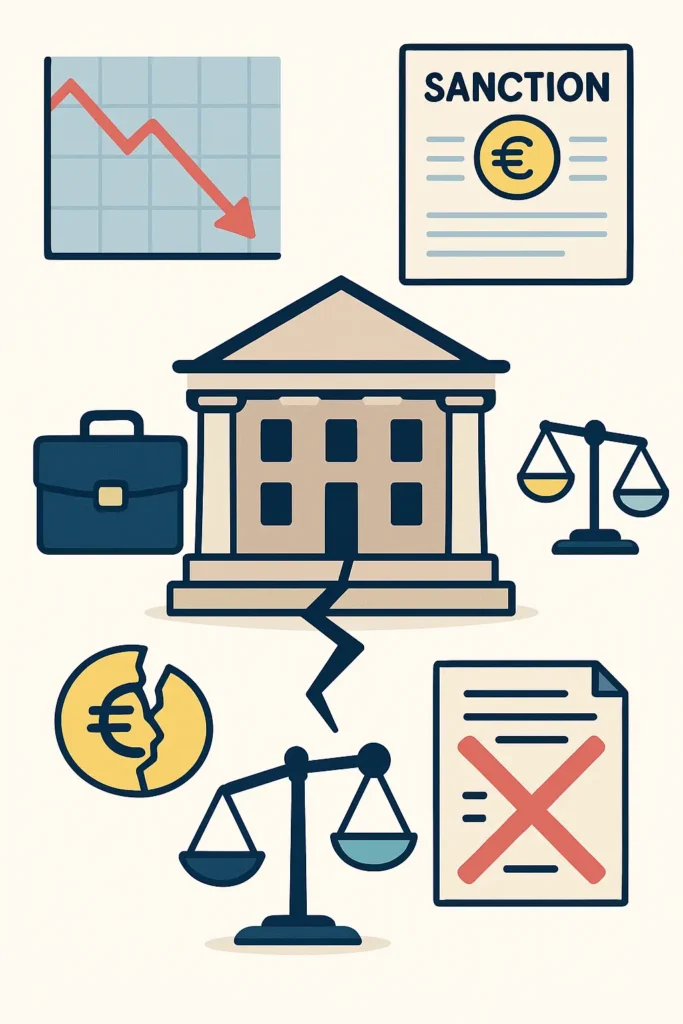
French law is strict regarding unlawful taking of interest, corruption and favoritism. The legal consequences can be severe for those responsible for conflicts of interest. They may face:
The impact on reputation is often one of the most devastating and hardest to repair. An organization involved in a conflict of interest may suffer from:
To identify sensitive activities and functions, anticipate potential areas of conflict, and implement appropriate preventive measures.
Or a clear and accessible internal policy to reiterate the organization’s ethical values, clarify illegal practices and questionable behavior, encourage reporting, and present the sanctions.
To help executives, board members, elected officials and employees identify high-risk situations and adopt best practices.
(managerial approval, dual sign-off, ethics committees) to limit the risks of favoritism and biased decisions.
To deter fraudulent behavior and strengthen trust in the organization.
Establishing a climate of dialogue and trust.
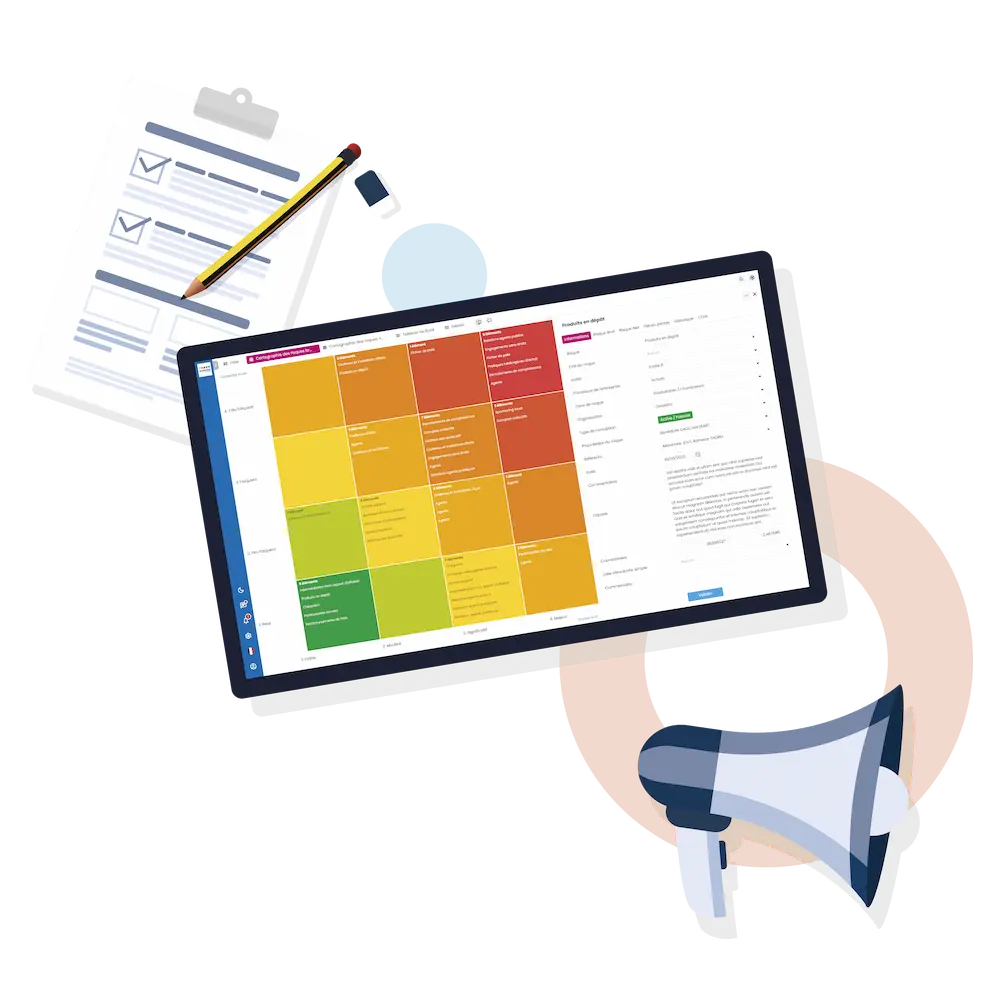
The rise of digital technologies offers high-performing solutions to identify, monitor and prevent conflicts of interest within companies, local authorities and public administrations. Their main advantages? They simplify, streamline, automate and secure procedures.
Depending on their features, specialized software can in particular:
As the many examples illustrate, conflict of interest situations are numerous and varied, both in the private and public sectors. Yet their impact can be considerable financially, legally and reputationally.
Only a proactive prevention approach can enable the company, local authority or organization to effectively manage this multitude of potential situations. It relies on rigorous procedures, clear rules and effective tools. Leveraging new technologies provides an additional lever to strengthen vigilance and ensure transparency and ethics in the management of public and private affairs.