
While not a criminal offense in itself, a conflict of interest situation can have disastrous consequences for a public or private organization: loss of reputation, breach of trust, decreased competitiveness, budget imbalance, etc.
This is why the harmful behaviors it causes must be sanctioned. The law is strict regarding illegal taking of interests, corruption, or favoritism. The company, local authority, or administration can also act through disciplinary sanctions and a risk prevention policy.
What are the penalties for conflicts of interest and how can they be prevented? Overview and case studies.

A conflict of interest is a situation in which a personal interest interferes with the organization’s interest, threatening the objectivity, impartiality, and independence of a decision. In itself, a conflict of interest is not a criminal offense.
However, private and public corruption, the offense of favoritism, and illegal taking of interests are strictly sanctioned by law.
Any public official found guilty of active or passive corruption faces up to ten years’ imprisonment and a fine of one million euros. The maximum sentence is reduced by half in cases of private corruption.
The legal entity (company, local authority, or administration) can also be prosecuted for active corruption. The amount of the fine is equal to five times the fine for natural persons (articles 435-1 et seq. of the Criminal Code).
The same penalties apply to influence peddling, which sanctions the use of a public position to influence a decision in favor of private interests (article 433-2 of the Criminal Code).
The penalties apply to the perpetrator responsible for the offense as well as to their accomplices, whether they belong to the public service or a private company.
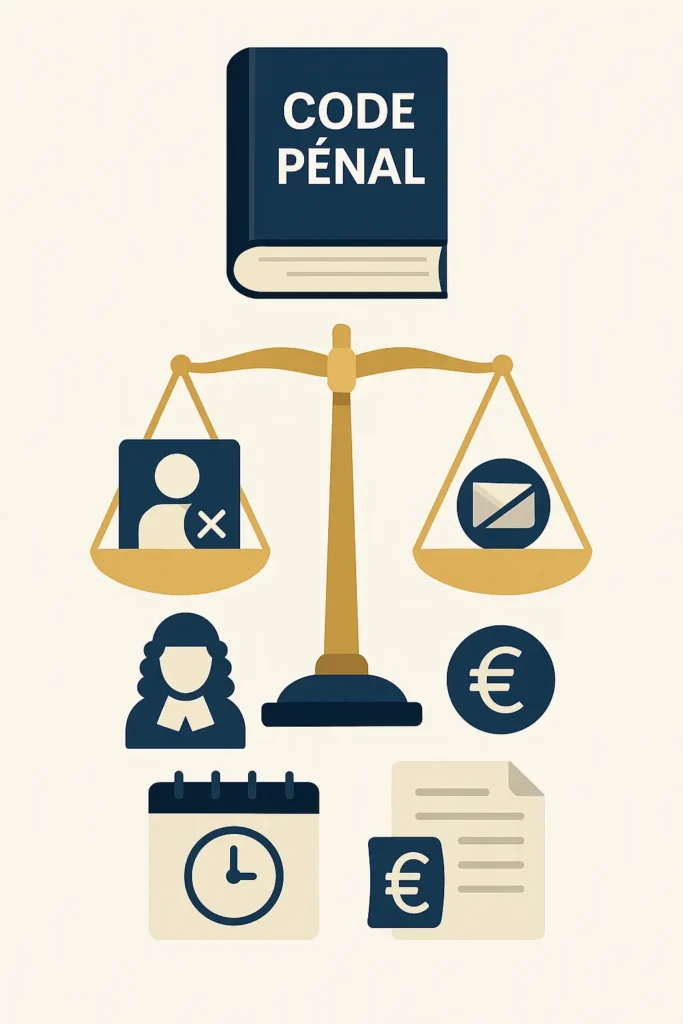
The act of an elected official, public official, or private person participating in a public mission obtaining an interest in a private company whose supervision, administration, or payment they ensure is punishable by five years’ imprisonment and a fine of 500,000 euros (article 432-12 of the Criminal Code).
The law provides for a penalty of two years’ imprisonment and a fine of 200,000 euros if a representative of public authority (elected official, public official, administrator, etc.) grants an unjustified advantage to a person or company by circumventing the rules of freedom of access and equality of candidates for public contracts (article 432-14 of the Criminal Code).
Illegal practices caused by a conflict of interest situation subject the perpetrator of the offense to a risk of disciplinary sanction. The company, local authority, or administration has the right to apply it, even in the absence of any criminal penalty.
In the private sector, a conflict of interest situation does not constitute an offense. While it cannot be criminally sanctioned, the company has the right to apply disciplinary sanctions.
Violation of the duty of loyalty is recognized by case law in the name of the obligation to execute the employment contract “in good faith,” as stated in the Labor Code. This includes, for example, a non-compete obligation or an obligation to prioritize the organization’s interests. Several rulings by the Court of Cassation recall this principle (Cass. Soc. January 12, 2012, no. 10-20.600; Cass. Com. November 15, 2011, no. 10-15.049).
Penalties must be proportionate to the fault. They can range from a warning to dismissal for serious or gross misconduct, including disciplinary suspension with loss of salary, demotion, transfer, or dismissal for real and serious cause.
Penalties are clearly written in the company’s internal regulations and may be included in the internal code of conduct made mandatory in certain companies by the Sapin 2 law.
The public service has an arsenal of disciplinary sanctions, regulated by the General Code of the Public Service or CGCT (articles L530-1 to L533-6). The local authority or administration has the right to suspend from their duties any civil servant who commits an act considered serious before appearing before the disciplinary board.
Warning, reprimand, temporary exclusion, removal from the advancement table, grade reduction, demotion, retirement, dismissal: the graduated scale of penalties allows for punishing conflicts of interest in proportion to their severity.
The CGCT also provides for disciplinary sanctions against local elected officials. Mayors and deputy mayors can be suspended or dismissed before the end of their term in the event of serious misconduct committed in the exercise of their duties or outside them.
Dans le cas d’affaires de conflits d’intérêt, nombre de sociétés échappent à la justice en se saisissant de l’outil de justice transactionnelle, créée par la loi Sapin 2. C’est le cas de la société de luxe LVMH qui a accepté de conclure une convention judiciaire d’intérêt public (CJIP) et de payer une amende de 10 millions d’euros pour mettre fin aux poursuites de trafic d’influence. L’affaire impliquait un ancien directeur de l’ex-DCRI (Direction centrale du renseignement intérieur) reconnu coupable d’avoir sollicité des informations confidentielles au profit de LVMH.
Dans le cadre des marchés truqués d’EDF, la majorité des sociétés poursuivies ont aussi négocié une CIJP et payé des amendes publiques pour éteindre l’action judiciaire.
Depuis la création de cet outil, nombre de sociétés poursuivies pour recel de favoritisme, recel de prise illégale d’intérêts ou corruption choisissent la voie de l’accord, malgré des amendes élevées (société Paprec, Groupe Omnium développement, Bouygues bâtiment, Airbus, et.) L’objectif ? Éviter les poursuites judiciaires publiques préjudiciables à leur réputation (1)
En revanche, la CIJP ne s’applique pas aux dirigeants dont la responsabilité individuelle est engagée et souvent lourdement condamnés.

Les affaires politico-judiciaires défraient régulièrement la chronique. Au vu de la longueur et de la complexité des procédures, beaucoup sont encore dans les tuyaux de la justice. Quelques affaires emblématiques ont cependant vu la condamnation de leurs auteurs. Les sanctions sont souvent assorties de peines d’inéligibilité.
En 2020, François Fillon a été condamné à quatre ans de prison, dont un ferme, pour détournement de fonds publics, abus de biens sociaux et prise illégale d’intérêts, pour avoir attribué un emploi fictif à sa femme en tant qu’assistante parlementaire. Un nouveau procès est ordonné en 2024 par la Cour de cassation pour réexaminer la nature des peines.
L’affaire des sondages de l’Élysée est une autre affaire emblématique de conflits d’intérêt. Elle porte sur des achats d’enquêtes d’opinion sans aucune mise en concurrence, pour un budget de 1,5 million d’euros. Le président du cabinet de sondages n’est autre qu’un conseiller du Président, Patrick Buisson. Les principaux protagonistes sont condamnés à des peines allant de six mois à deux ans de prison avec sursis et des amendes. Les sociétés concernées sont aussi sanctionnées par des amendes de 50 000 à un million d’euros.
Ex-président de la Fédération Française de Rugby, Bernard Laporte a été condamné à deux ans de prison avec sursis et 75 000 euros d’amende pour des faits de corruption passive, de trafic d’influence et de prise illégale d’intérêts. Son délit ? Avoir attribué un contrat d’image à un proche en échange de commissions.
Dans une affaire de marchés truqués au profit de son frère, Jean-Noël Guérini a été condamné à trois ans de prison, dont dix-huit mois fermes et à 30 000 euros d’amende.
D’autres procès moins emblématiques ont vu la condamnation de maires et d’adjoints au maire pour prise illégale d’intérêts et favoritisme dans les marchés publics.
En revanche, les collectivités sont rarement poursuivies en tant que personnes morales. En 2014, une commune a été condamnée à 15 000 euros d’amende pour délit de favoritisme, décision jugée « inédite et atypique ». (2)
Justice can be severe with natural persons involved in conflicts of interest.
The company, local authority, and administration also sanction the individual. Disciplinary penalties can disrupt a life. Avoiding penalties requires preventing conflict of interest situations upstream through prevention and risk management tools.

The company, local authority, or administration can implement a mandatory declaration of interests and assets, with an annual update campaign.
The declaration must be required for the most sensitive positions, identified in the risk mapping. Note that the 2016 law on ethics and the rights and obligations of civil servants makes the declaration of interests mandatory for the most exposed public officials. However, it can be extended to all, while respecting privacy and personal data protection.
Using specialized software facilitates self-declaration via an online form with customized fields (list of past and current professional and volunteer positions, spouse’s profession, financial interests, etc.).
Decisions biased by conflict of interest situations are the source of economic, financial, legal, and reputational problems for the organization. The company, local authority, or administration can limit this risk by framing decision-making.
It can impose collective decision-making through hierarchical validation rules and dual signature requirements.
Through its internal regulations and/or internal code of conduct, the company, local authority, or administration can impose rules limiting conflicts of interest, such as prohibiting the use of organizational resources for personal purposes.
These documents also help raise awareness and train employees by describing risky situations that can lead to conflicts of interest, as well as the disciplinary sanctions incurred by perpetrators of offenses.
In the public service, the appointment of an ethics officer in local authorities and administrations was enacted by the 2016 law on civil servant ethics. They have an essentially advisory function for officials who consult them to learn about their rights and duties or report a risk of conflict of interest. The administration can also consult them for an opinion on the combination of public and private activities of a civil servant or a departure to the private sector.
Since June 1, 2023, local authorities must also designate an ethics officer dedicated to local elected officials.
The company can also establish a code of ethics and appoint an ethics committee, preferably independent of management to ensure its neutrality. It can address all ethical issues concerning the company. It can be referred to by an employee or third party wishing to report a potential conflict of interest situation. A protective and discreet alert system encourages the reporting of information.
Avoiding a risk is difficult if it is not known. Awareness and training are essential to alert elected officials, executives, administrators, and employees to the risks and mechanisms of conflicts of interest.
In the event of an offense committed by an employee or public official, the existence of training and awareness tools, as well as regulatory documents (internal regulations, internal code of conduct), also help prove the fault and the accused person’s knowledge of the rules.
The penalties provided for by French law—whether criminal or disciplinary—are severe and underscore the importance of adopting ethical and loyal conduct.
While prison sentences and fines can destroy lives and shake the reputation of companies, local authorities, and administrations, they are only part of the solution. Clear and rigorous conflict of interest prevention and management strategies ensure transparency in decision-making and prevent simple errors in judgment from turning into costly scandals. Strict compliance with rules and constant vigilance are the best insurance against irreversible repercussions.