Organizations are increasingly faced with environment-related risks: climate change, resource scarcity, and stricter regulations.
These environmental risks, at the heart of the E pillar of ESG, represent both a constraint and an opportunity for transformation toward more sustainable practices.
When properly integrated into risk mapping, they strengthen the resilience, governance, and regulatory compliance (notably with the CSRD) of organizations.
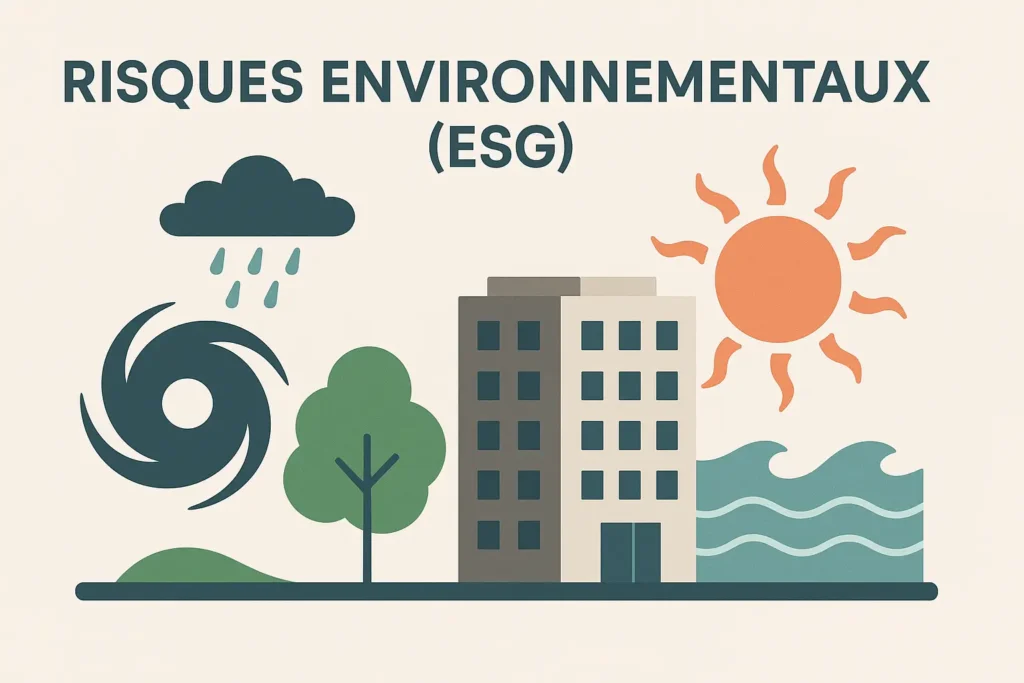
These risks cover all events or decisions likely to have an impact on the environment or be affected by its consequences, and are part of the various types of risks for which organizations must prepare.
Three main categories stand out:
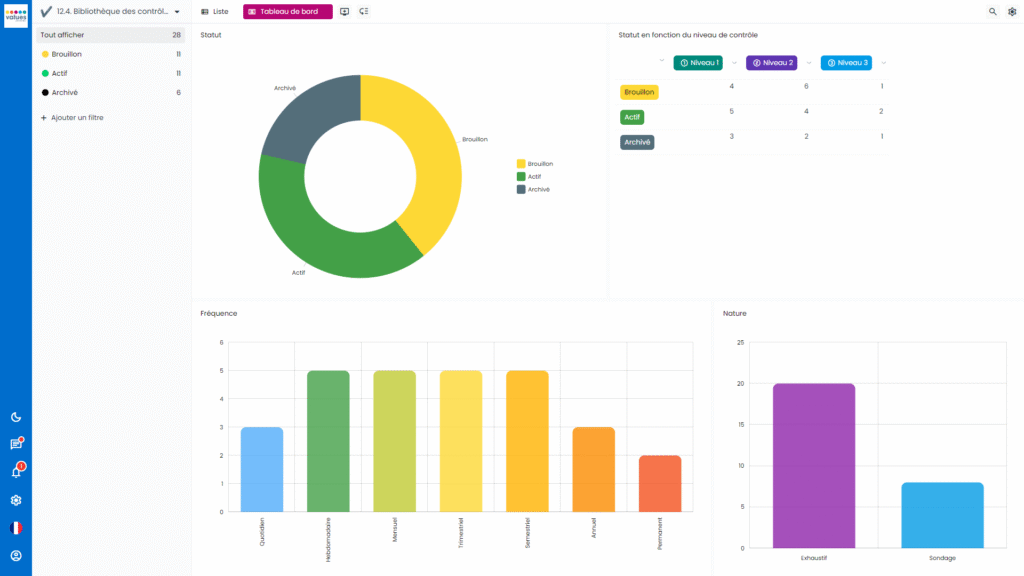
Values Associates software supports organizations in managing environmental and climate risks. It enables:
Centralize and assess risks related to environmental impacts, resources, and regulatory compliance.
Ensure compliance with major frameworks (CSRD, Green Taxonomy, TCFD).
Strengthen governance and traceability of environmental actions within the organization.
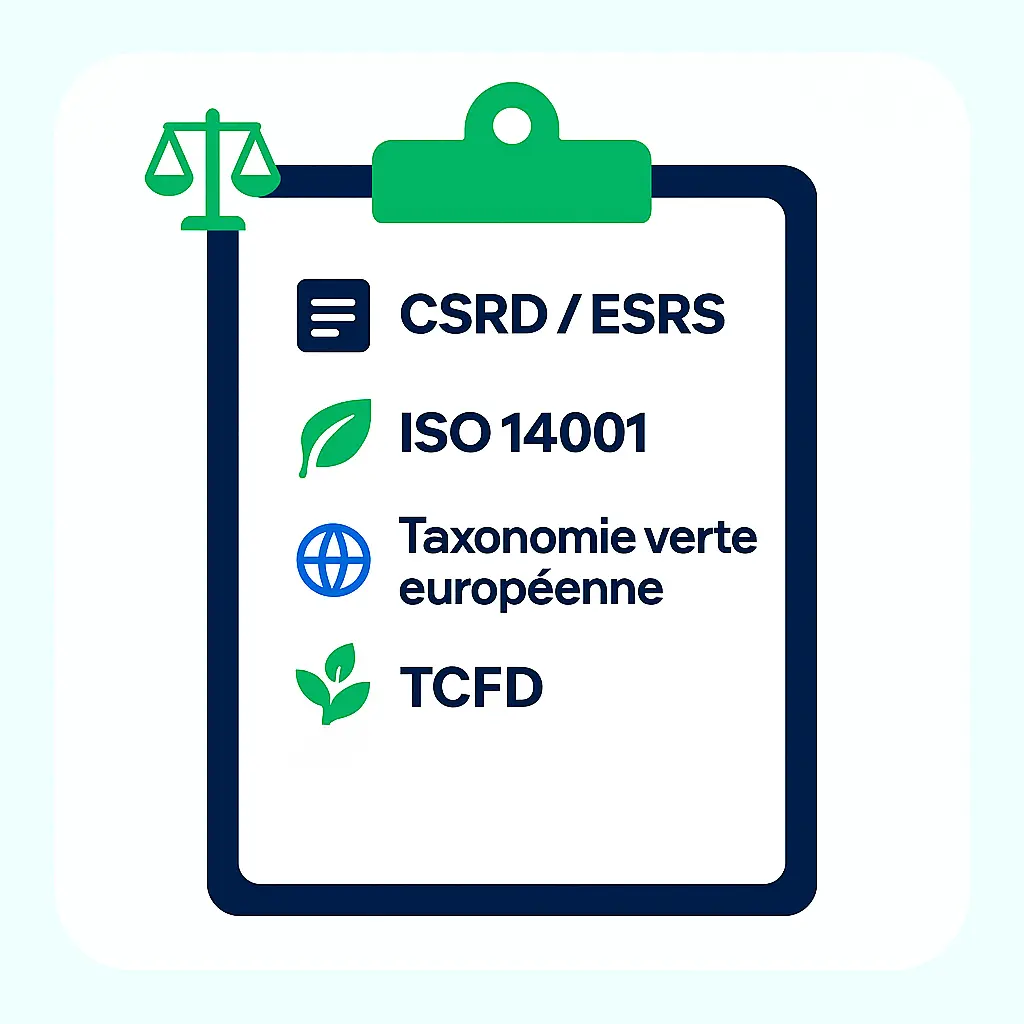
Several frameworks guide organizations in managing environmental risks and integrating them into ESG governance:
To limit their exposure and strengthen resilience, organizations can:
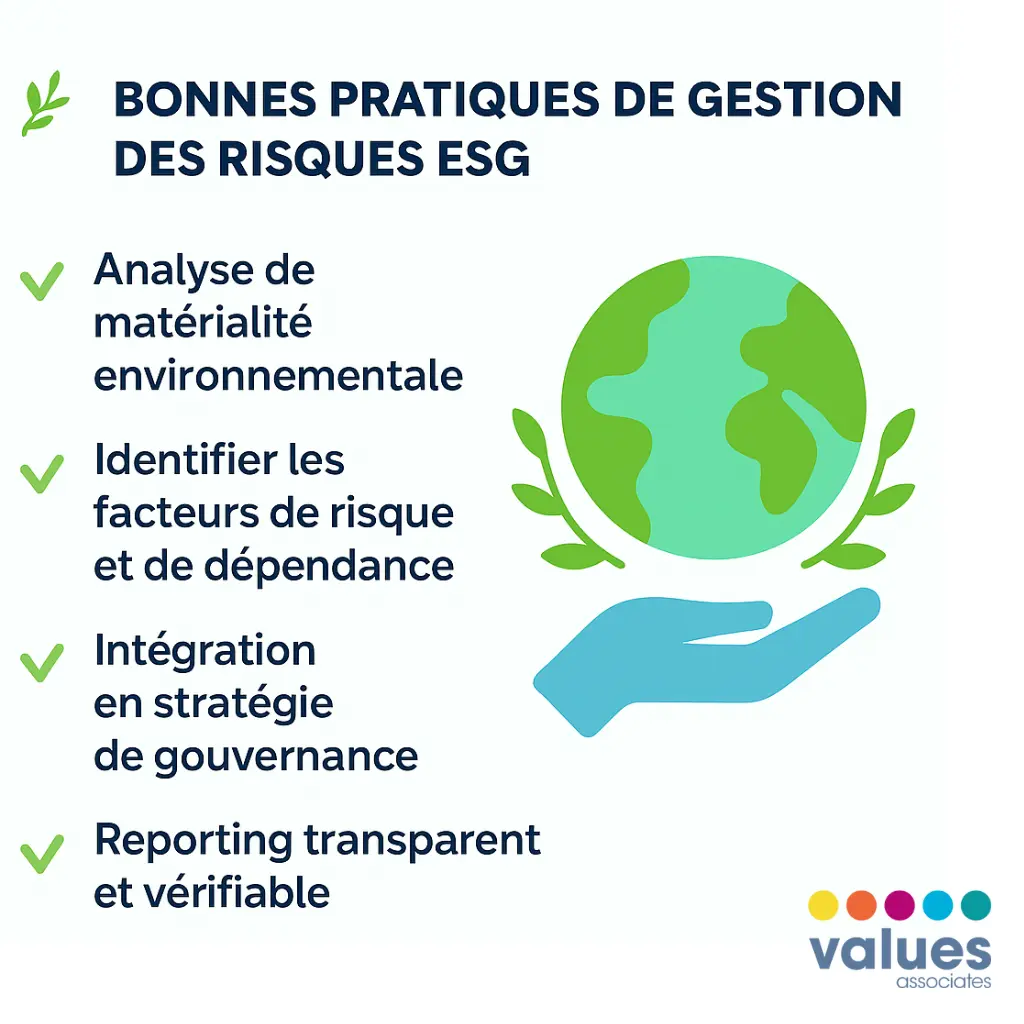
Environmental risk management contributes directly to the resilience, performance, and social responsibility of organizations.
It supports the transition to a more sustainable business model, in line with regulatory requirements and stakeholder expectations.
Values Associates software is part of this approach by offering a comprehensive method to manage, document, and secure environmental and ESG risk management.
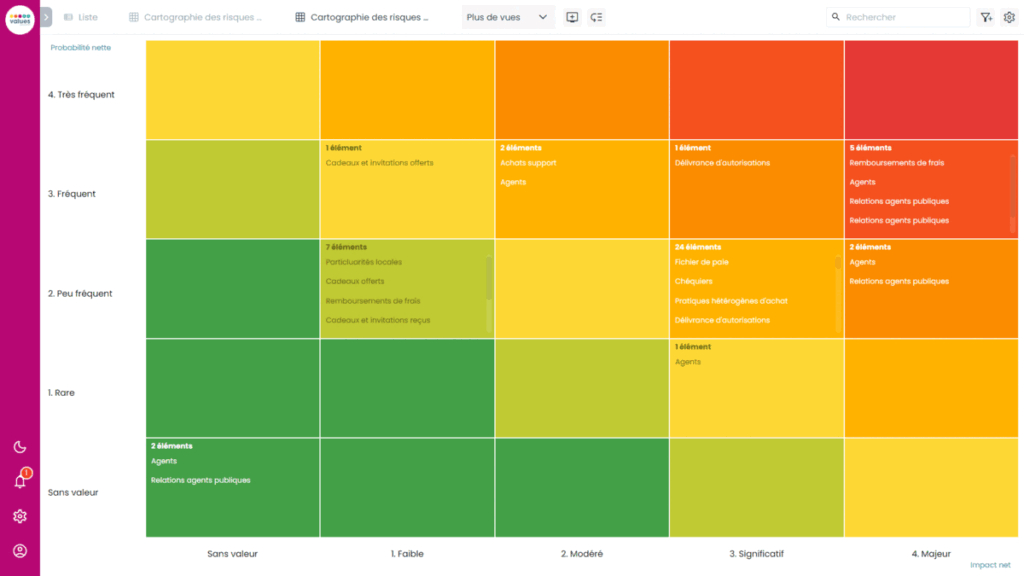
Companies are exposed to several types of environmental risks: physical (natural disasters, pollution, resource scarcity), regulatory (non-compliance with CSRD, sanctions related to emissions), economic (rising cost of raw materials), and reputational (accusations of greenwashing or lack of transparency).
The identification of environmental risks is based on materiality analysis, mapping dependencies on natural resources, and assessing regulatory compliance. The goal is to integrate these risks into overall ESG governance and track their evolution over time.
The main frameworks are CSRD / ESRS, the ISO 14001 standard, the EU Green Taxonomy, and TCFD recommendations. Together, they provide a solid foundation for structuring reporting, ensuring transparency, and driving environmental performance.
Values Associates software helps organizations map, document, and track their environmental risks. It promotes an integrated approach to ESG governance, compliant with regulatory requirements and tailored to each company’s sustainability strategy.