
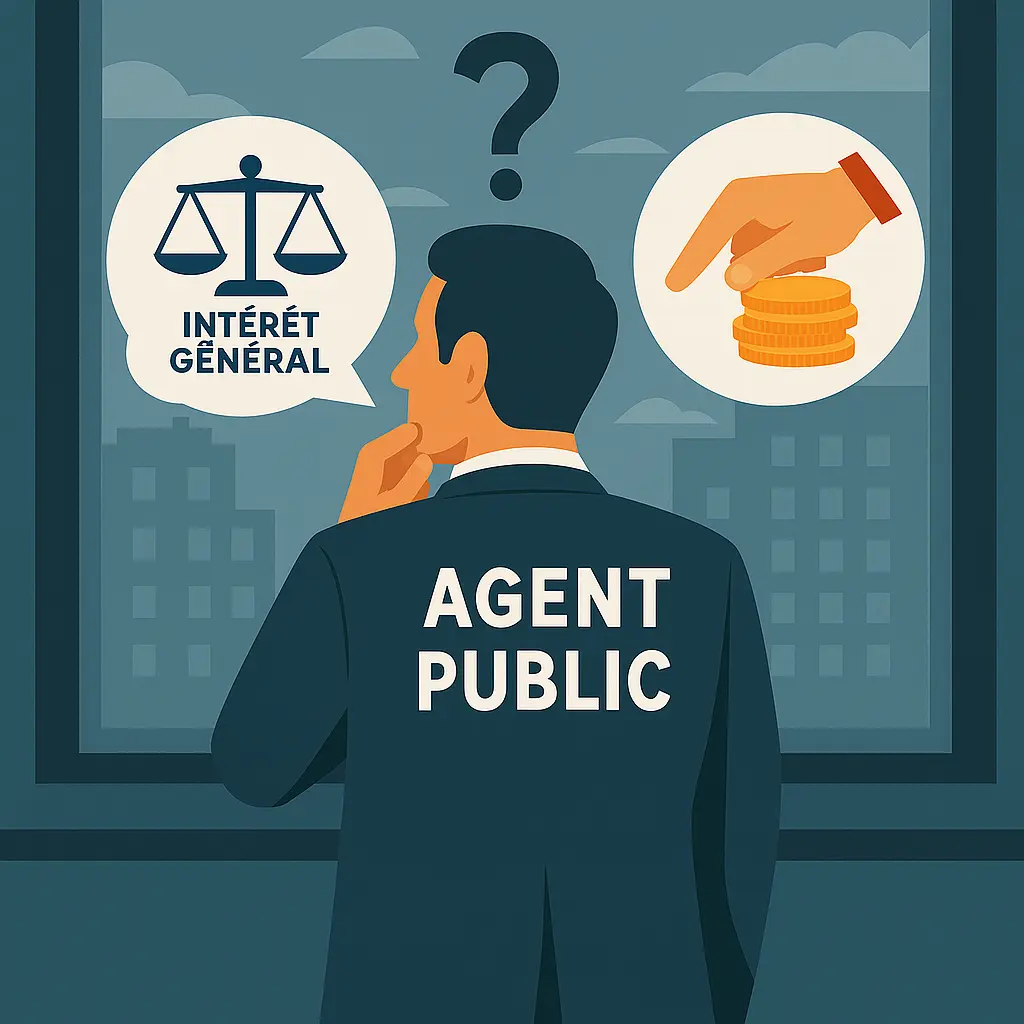


By prioritizing private interests over the collective or administrative interest, conflicts of interest undermine the very foundation of public service: serving the general interest.
By leading to biased decisions, it erodes the fundamental principles of neutrality, equality, and probity governing public service law.
Beyond these ethical impacts, conflicts of interest threaten the budgetary stability of the community or administration, disrupt its internal functioning, and increase public distrust. Combating situations of conflicts of interest is therefore a real necessity.
What are the common types of conflicts of interest in the public sector and how to avoid them? Examples and tools.
The public sector is particularly susceptible to conflicts of interest due to its proximity to citizens and the management of public funds.
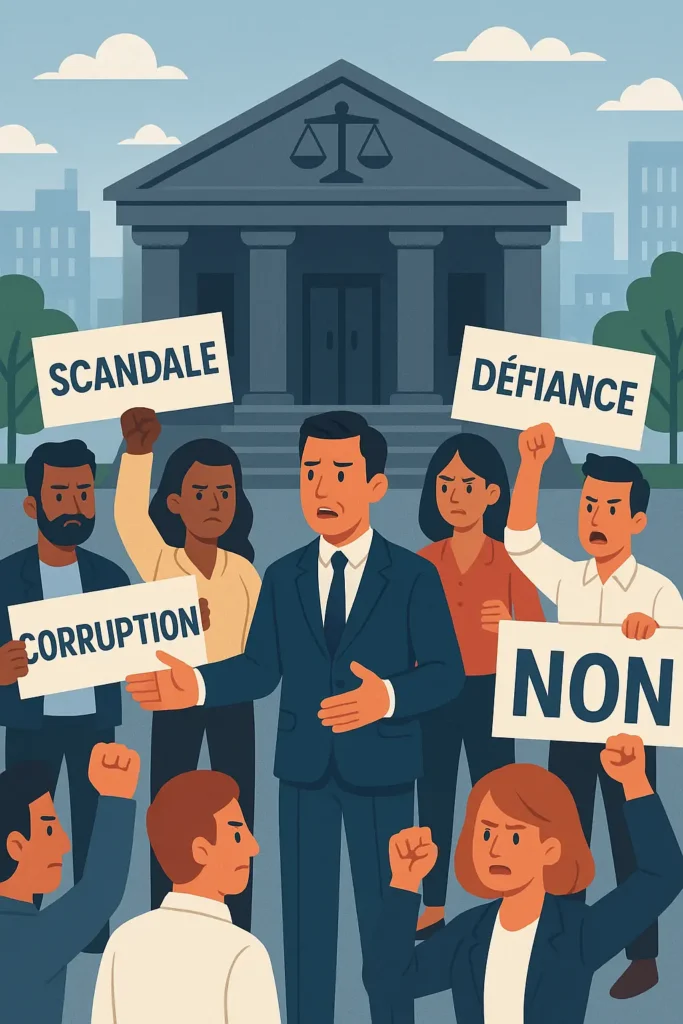
Whether real or merely perceived, conflicts of interest undermine citizens’ trust in public institutions.
When a scandal erupts, the lack of transparency reinforces the feeling of corruption and injustice, fueling distrust towards the state and elected officials. This loss of trust can lead to a decline in democratic participation and a rejection of public policies, deemed illegitimate and ineffective.
Decisions guided by personal interest are often costly for the community or administration. They can lead to the selection of less competitive suppliers and service providers, offering higher prices and lower service quality.
However, local authorities are obliged to present a balanced budget. Any overspending requires new arbitrations in public policies. Elected officials have two choices: reduce expenses by cutting projects and subsidies, or increase revenues by raising local taxes.
Whatever their decision, these unpopular measures fuel the resentment of the public, eroding their trust.
Current events are rich with scandals involving conflicts of interest in the public sector. These can take several forms, all of which are punishable by law and the Penal Code.
The offense of favoritism occurs when a public official or elected representative awards a contract by favoring a company or service provider without respecting competitive bidding rules. The conflict of interest then undermines free access and equality among candidates in public procurement.
The risk is particularly high at the level of municipalities, inter-municipalities, and departments. Elected officials often hold parallel positions in local businesses and associations. Having grown up in the area, they also maintain numerous close friendships and family ties.
Thus, many favoritism offenses concern the awarding of public contracts to companies whose director is an elected official, a brother, a friend, a former classmate, etc. The elected official is also in a conflict of interest situation if they are found to be a shareholder of the tender winner. Finally, certain services may be entrusted to suppliers without competitive bidding, as part of a “quid pro quo” or the granting of private advantages.
An example: in 2024, the president of the Bouches-du-Rhône departmental council, Jean-Noël Guérini, was convicted for rigging public contracts. 15 years prior, he had preempted land to save a rare plant, only to resell it to his brother for the expansion of a landfill.
Nepotism is the act of using one’s position to grant advantages to a family member or close associate, regardless of their qualifications. This offense extends beyond public procurement.
Nepotism is, for example, characterized if:
Examples: numerous convictions concern elected officials who have recruited family members. In 2017, a mayor was convicted for hiring his sister as Director General of Services (DGS). In 2014, the president of a public housing office (OPH), also a deputy mayor, was convicted for having three of her relatives hired within the OPH. In 2014, a mayor was convicted for voting to hire his daughter at the town hall secretariat and the municipal campsite.
Illegal taking of interest is also a criminal offense. It punishes any person entrusted with a public service mission who uses their position to obtain a personal advantage, direct or indirect.
This can concern an elected official who facilitates the obtaining of a contract for a company in which they hold shares, or a public official who favors a company to which they are financially linked.
An example: in 2001, a member of the board of directors of an autonomous port under the status of a public industrial and commercial establishment (EPIC) was convicted of illegal taking of interest. The reason? He was also a shareholder and manager of a maritime transport company and had voted for the gratuitous remission of unpaid fees owed by that company to the EPIC.
Influence peddling occurs when a public official or elected representative uses their influence to steer a decision in exchange for a personal advantage.
This could involve an elected official intervening with an administrative department to favor a service provider in exchange for a promised consideration, or a senior civil servant using their network to influence appointments or the awarding of contracts. Unlike corruption, where a direct exchange of money or services takes place, influence peddling relies on a more subtle but equally illegal game.
An example: in 1998, the director and commercial manager of a company were convicted of influence peddling. Through an intermediary, they had paid sums to the first deputy mayor of a municipality so that he would use his influence to favor the company within the tender committee and help it win the contract.
The revolving door syndrome refers to the transition of a senior civil servant, elected official, or public agent to the private sector, often in an area related to their former responsibilities. This situation can be problematic if the person uses information or networks acquired in the public sector for the benefit of a private company, creating unfair competition or a risk of collusion.
To limit these abuses, rules govern transitions between the public and private sectors, notably through controls by bodies such as the High Authority for Transparency in Public Life (HATVP) or the local ethics officer.
An example: in 2014, a former prefecture official was convicted of revolving door syndrome for joining a private mandated company whose project legality and urban planning acts he used to control.
The repercussions of conflicts of interest on local authorities and administrations are numerous. In addition to the loss of trust and budgetary impact, there are legal, financial, organizational, and ethical consequences.

Conflicts of interest expose local authorities and administrations to high legal risks.
In the context of legal cases involving elected officials and public agents, the administration's liability may be engaged.
In cases of illegal taking of interest or favoritism, the penalties provided by law include substantial fines, prison sentences for those responsible, and prohibitions from holding office.


Ineffective choices made based on personal interests can lead to unjustified public expenditure.
In the event of litigation or sanctions related to conflicts of interest, administrations must also bear the costs of legal proceedings, fines, and potential damages. These costs weigh heavily on the administration's budget and public finances.


Conflicts of interest disrupt the proper functioning of administrations by introducing biases in the management of public resources.
For example, when a public official awards contracts, subsidies, or agreements in favor of their associates or personal interests, this can lead to a misallocation of resources. The effectiveness of public policies is compromised.
Funding for important initiatives can be diverted to favor less relevant or less competitive projects, resulting in a loss of value for citizens.


Public service is based on principles of equality, neutrality, and probity. Conflicts of interest undermine these fundamental principles, by granting advantages to individuals and companies with ties to decision-makers.
This fosters a culture of privilege and discriminatory practices, which erodes the trust of citizens and the public.

Preventing conflicts of interest in the public service is crucial to ensure the integrity of public officials, the transparency of administrative decisions, budgetary balance, and public trust in its institutions. The law has put in place three main tools to frame the risks of conflicts of interest in local authorities and administrations.
The declaration of interests and assets consists of declaring personal, financial, and family interests likely to interfere with the exercise of public functions.
It was made mandatory by the 2013 law on transparency in public life for senior public officials and civil servants. The 2016 law on ethics in public service extended this obligation to the most exposed local elected officials and public agents. According to the High Authority for Transparency in Public Life (HATVP), 18,000 public officials are concerned (ministers, parliamentarians, presidents and directors of regional and departmental councils, mayors and deputy mayors, members of control authorities, etc.)
The 2016 law also makes the appointment of an ethics officer mandatory in local authorities and administrations. This officer primarily provides an advisory function to public officials. They inform them of their rights and obligations. They receive reports of real, apparent, or potential conflicts of interest situations, and advise on appropriate behaviors to prevent and manage them. Finally, they examine requests for combining public and private activities by public officials or requests for career changes to the private sector, in order to identify any potential risks of conflicts of interest.
The ethics officer also ensures the implementation of an awareness and training policy, to make public officials aware of the risks of conflicts of interest and their legal obligations.
Since June 1, 2023, an ethics officer dedicated to local elected officials must also be appointed by local authorities.
In addition to dual signatures, hierarchical validation, collective decisions in tender committees and other governance bodies, the law on transparency in public life has established another framework for decisions. It imposes the automatic withdrawal of decisions by local elected officials and government members if their personal interest is involved.
A public official may also be compelled to withdraw from the examination or making of certain decisions whenever a conflict of interest is suspected.
Conflicts of interest in the public sector pose a real threat to the integrity of local authorities and administrations.
Their impact can be profound, affecting the effectiveness of public policies, the transparency of decisions, and budgetary stability. Adopting a proactive policy for preventing and managing conflicts of interest is essential to ensure the probity of elected officials and public agents and to restore public trust. Vigilance, transparency, and accountability remain the keys to an ethical public sector that respects its founding principles.
Discover our conflict of interest management software or contact us for support.