Our module dedicated to accounting control procedures and the internal control and audit system allows us to meet the requirements of Article 17 of the Sapin 2 law, and more importantly, its interpretation by the French Anti-Corruption Agency.
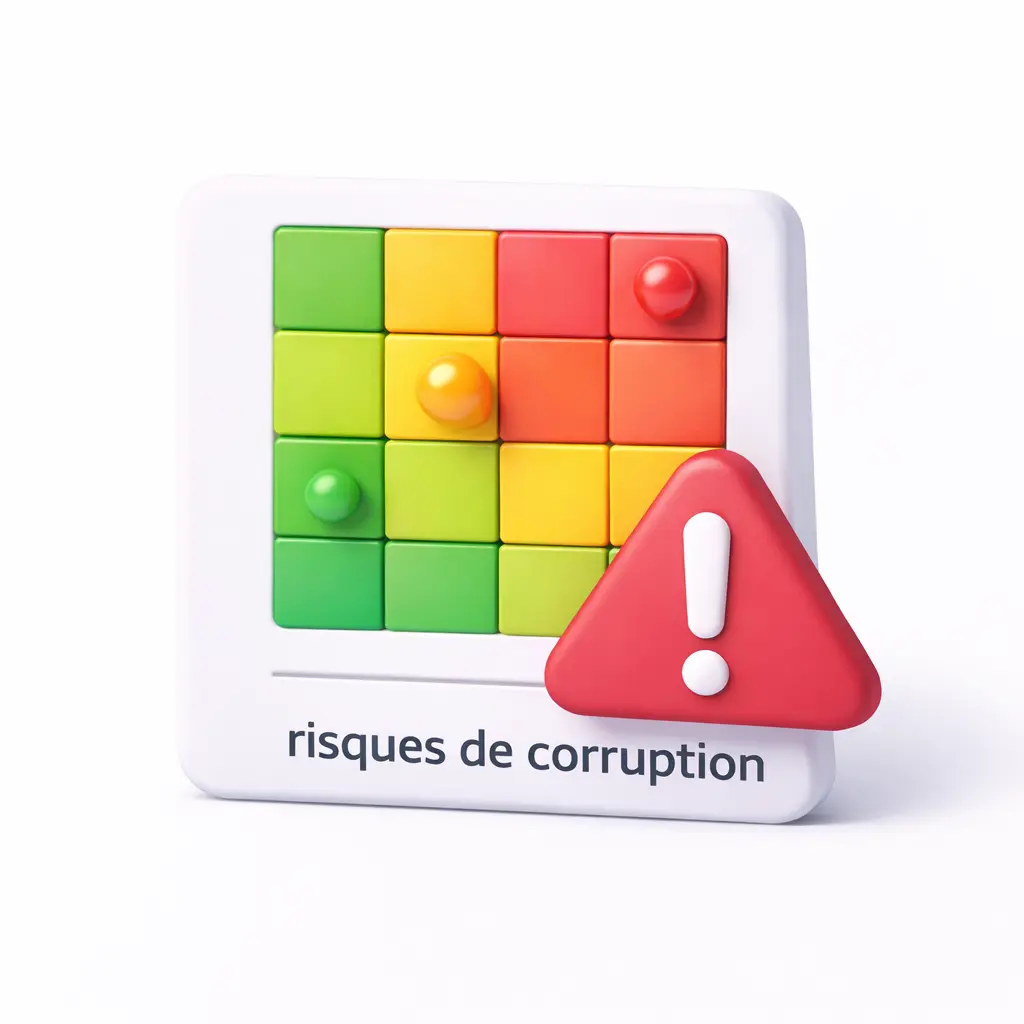
Create or transpose your corruption risk framework and document all identified corruption risks within your organization by providing detailed descriptions based on their nature and scope, to facilitate the assessment of each risk (gross, net).
Ensure regular communication with all stakeholders through indicators and reporting covering the various stages of your framework, enabling you to anticipate, assess, and manage the corruption risks your organization may face.
Develop and implement specific controls and action plans. Controls can be created from a risk or directly from a control library.
Different control points can be listed within a control to indicate the steps to be carried out.
Action plans can be created during a risk assessment, when performing a control, or directly from the action plan module.
Centralize all actions from your organization’s corruption risk register, the register of corruption risk control measures, the corruption risk matrix, through to the audit trail of changes made to a risk assessment.
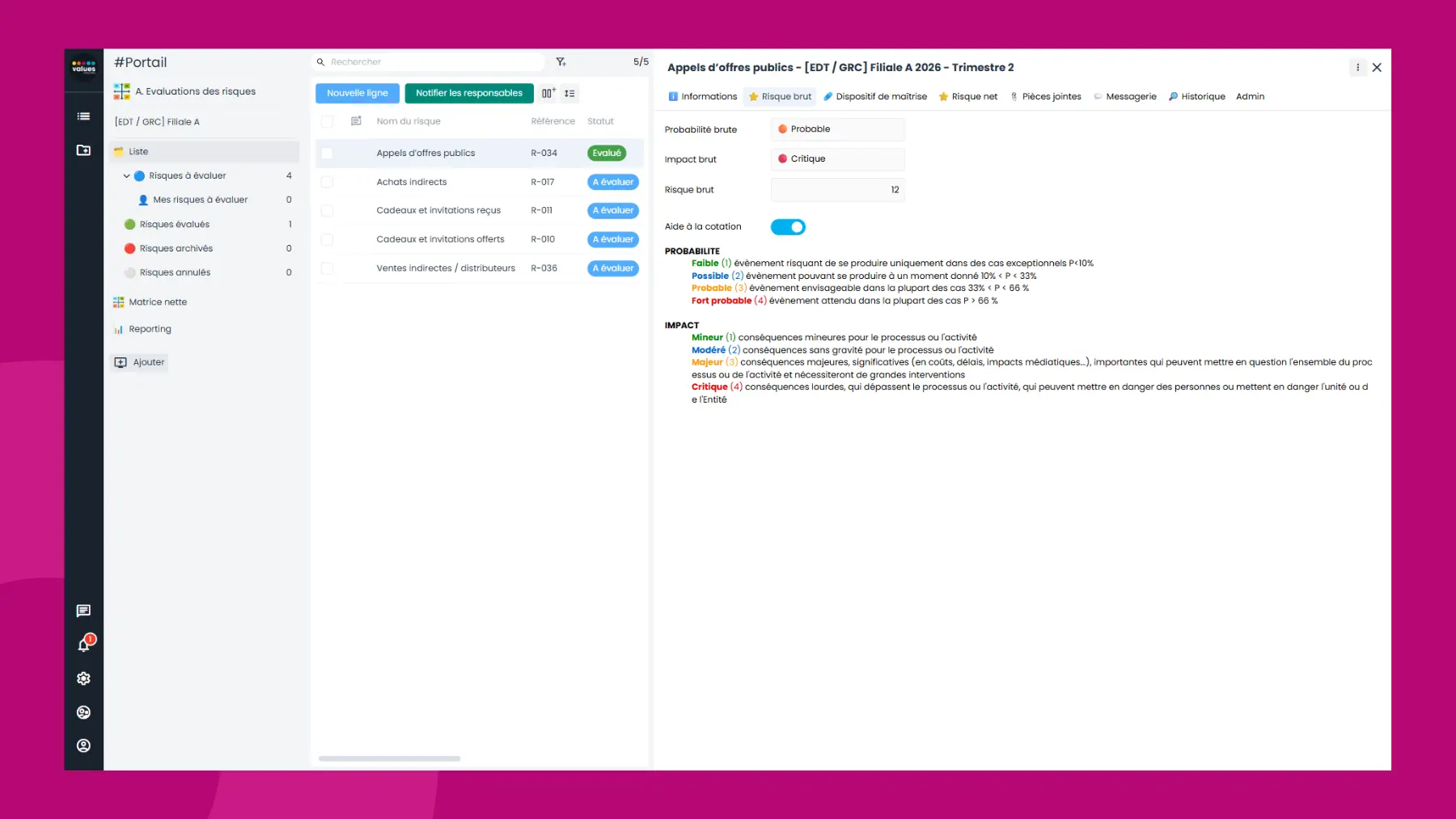
Les notifications spécifiques peuvent être configurées pour informer chaque utilisateur lors d’un changement de statut, comme la réalisation d’une action, tandis que les workflows sont ajustables avec plusieurs niveaux de validation, incluant la possibilité d’une approbation par un supérieur hiérarchique ou un groupe désigné, tel que la Direction des Risques.
Les catégories de collaborateurs peuvent être paramétrées avec des seuils de tolérance et des workflows distincts pour l’évaluation des risques de corruption ou des actions, garantissant un processus fluide et adapté aux besoins de chaque groupe d’utilisateurs.
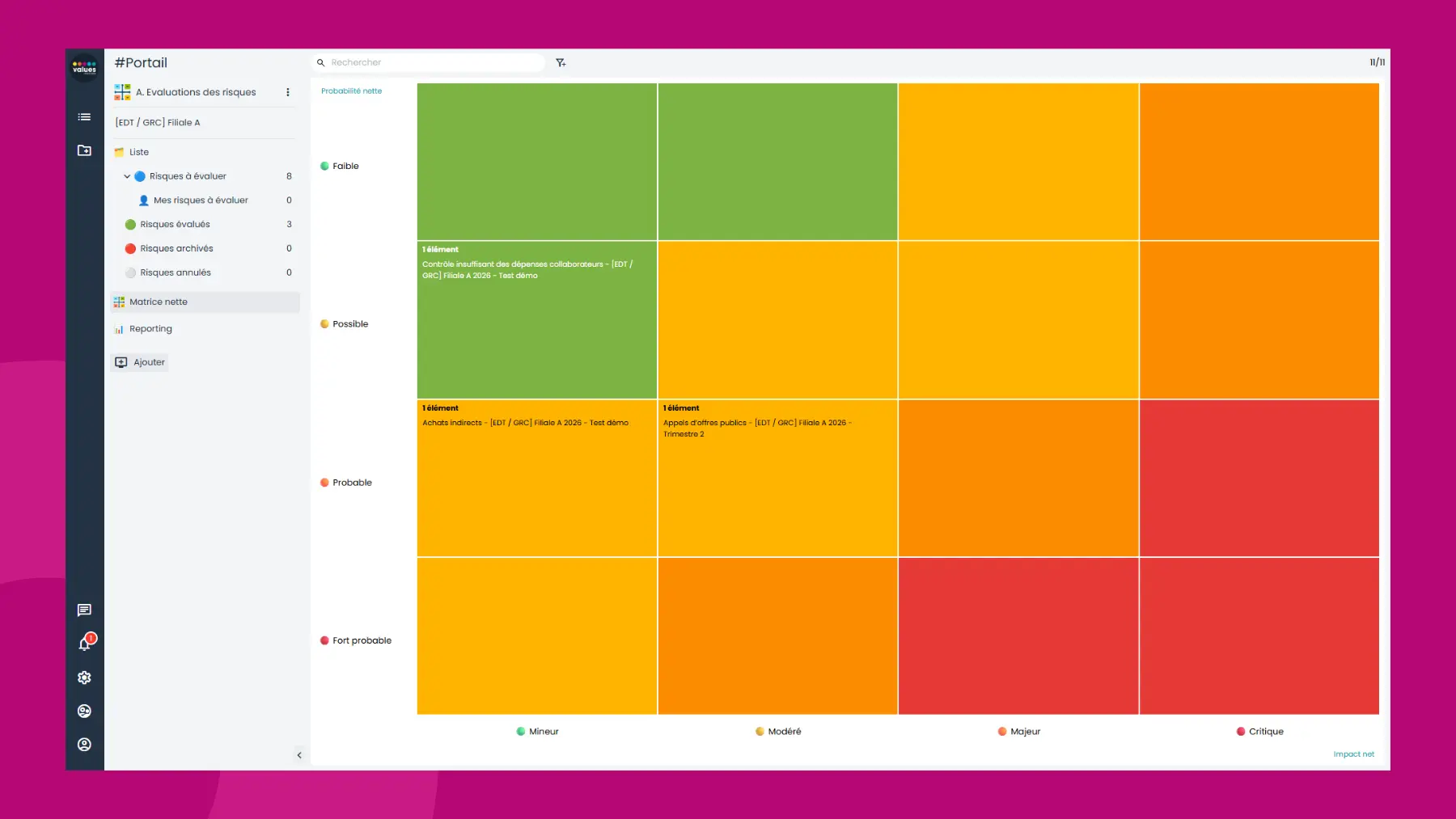
Bénéficiez de vues matrice dynamiques vous permettant d’organiser, de classer vos risques et d’anticiper vos actions grâce notamment à des filtres
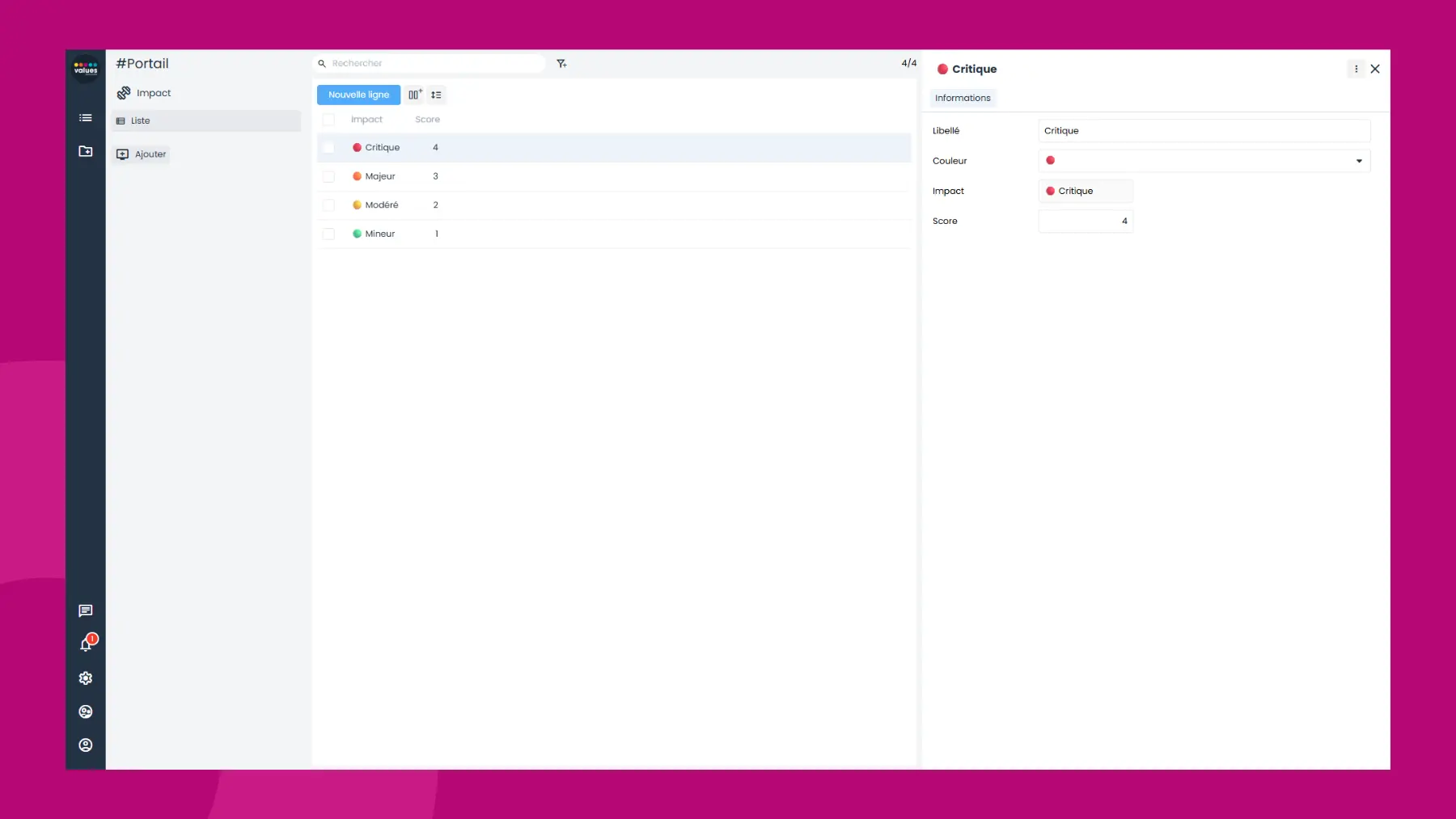
Le paramétrage des modalités d’évaluation du risque brut et du risque net permettant d’intégrer des scoring allant des plus simples aux plus sophitiqués.
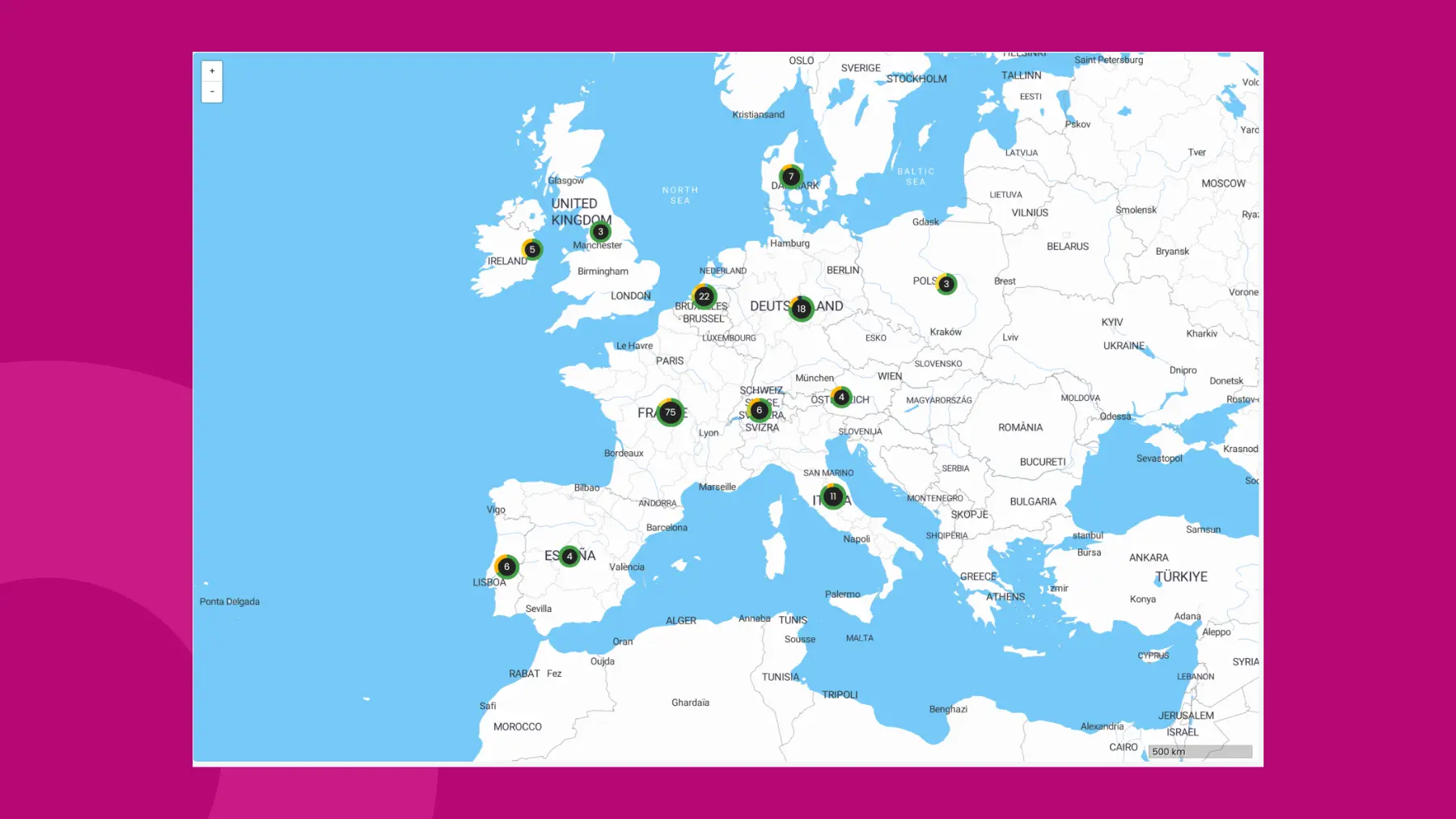
Le module propose un reporting dynamique et en temps réel, incluant un suivi de l’évolution des évaluations de risques dans le temps, un tableau de bord des évaluations réalisées, en cours ou à mener, ainsi qu’une répartition des risques par localisation géographique.

"Une excellente coordination pour atteindre nos objectifs"
"It's a real pleasure to work with you"
"The team stands out for its great responsiveness"
"Responsive and flexible"
"The flexibility of their solution and the quality of their support"
"Values Associates was able to provide a suitable response to our needs"
"Extremely satisfied"
The French Anti-Corruption Agency has reaffirmed the central role of risk mapping in developing an anti-corruption compliance framework.
These corruption and influence-peddling risks are identified based in particular on the business sectors and geographic areas in which an organization operates. In practice, this requires defining risk scenarios covering exposed processes for each activity. Once the risks have been identified, they must be prioritized and a relevant and effective framework identified or defined to control them.
Risk mapping is one of the most complex and demanding exercises to carry out in order to comply with the obligations of the Sapin 2 law.
1️⃣ Identifying the roles and responsibilities of stakeholders
2️⃣ Identifying processes and risk scenarios
3️⃣ Assessing gross risks
4️⃣ Net risk assessment
5️⃣ Risk prioritization and definition of associated action plans
6️⃣ Formalization, updating, and archiving
As our Sapin 2 software is fully configurable, the default fields delivered can be customized (label changes, adding or deleting fields, etc.).
By centralizing all relevant data, it enables you to create a clear and accurate overview of potential vulnerability areas.
Our secure, high-performance solution ensures rigorous management of your legal obligations and optimal protection against non-compliance risks, notably in compliance with the Sapin 2 law.
Used on its own or alongside other modules in our Sapin 2 software suite, it strengthens your organization’s governance in terms of corruption prevention and facilitates decision-making thanks to real-time data visualization and analysis tools.
Automate, centralize, and analyze your risks with a comprehensive solution that promotes transparency while contributing to proactive management and optimized governance.
Corruption risk mapping is central to the compliance framework defined under the Sapin 2 law.
Developing corruption risk mapping enables an organization to proactively define and assess the risks related to its specific internal and external context.
The Sapin 2 law requires organizations to identify and prevent corruption risks. These risks are specific to each organization.
Risk mapping provides an overview of potential threats and helps document the organization’s efforts to comply with anti-corruption requirements.
Key elements include identifying risk areas (linked, for example, to each of the organization’s processes or to its relationships with third parties), assessing the likelihood and impact of the identified risks, and implementing measures or controls to mitigate these risks.
Factors such as the frequency of interactions, transaction amounts, and relationships with public officials are particularly scrutinized.
Corruption risk mapping software is a tool designed to help organizations identify, assess, and manage corruption risks they may be exposed to. It enables these risks to be visualized in the form of maps or matrices, making it easier to understand their distribution and criticality within the organization.
Dedicated software simplifies the mapping process by facilitating collaboration, centralizing data, automating analyses and updates, and providing visualization and management tools.
This makes it possible to save time, improve the accuracy of assessments, and ensure better long-term management of corruption risks.
Unlike overall or major risk mapping, corruption risk mapping has the sole purpose of identifying, analyzing, prioritizing, and managing the organization’s corruption risks in the course of its usual business activities, based in particular on the business sectors and geographic areas in which it operates.
The AFA emphasizes that corruption risk mapping must be both comprehensive, formalized, and built using a documented methodology, structured (for example by business line or by process), scalable, and up to date.