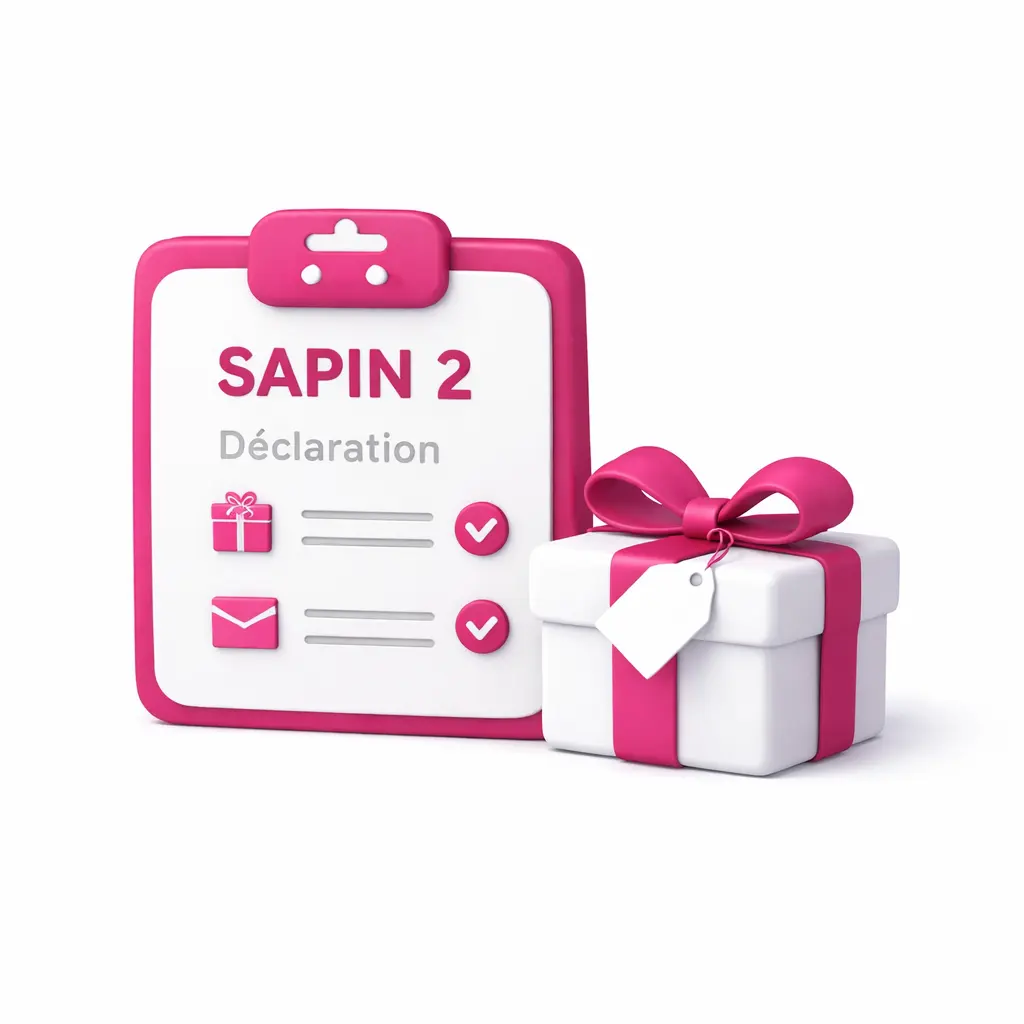
An all-in-one gifts and hospitality management software that centralizes and simplifies the declaration process, while adapting to the specificities of your organization.
Incorporate any specific organizational requirements related to different categories of gifts and hospitality, whether offered or received, thus ensuring precise management tailored to each situation.
Once the initial declaration information is completed, an automated check verifies its compliance with your organization's internal policies, ensuring a first layer of validation.
If the automated check identifies a need for validation, the declaration is then escalated, adding a level of human verification. For more complex or sensitive cases, additional validations may be required.
Ensure regular communication with all stakeholders through indicators and reporting covering the different stages of your framework, allowing you to evaluate and manage gifts and hospitality declarations within your organization.
Centralize all your information, from the register of accepted and refused gifts and hospitality declarations in your organization to the audit trail of evaluation changes made for a declaration.

Le logiciel intègre vos seuils financiers, critères de risques et circuits de validation. Chaque déclaration est analysée automatiquement : validation directe sous certains seuils, escalade vers le manager ou la conformité pour les cas sensibles.

Un formulaire structuré permet à chaque collaborateur de déclarer tout cadeau ou invitation offert ou reçu.
Les informations sont saisies une seule fois : nature de l’avantage, montant estimé, contexte, tiers concerné, justificatifs.
Accessible depuis un navigateur ou un smartphone.

Les référents conformité disposent d’une vision consolidée de toutes les déclarations, avec la capacité d’identifier les situations atypiques ou récurrentes.
Tableaux de bord dynamiques, exportables en PDF ou Excel pour la direction ou les auditeurs.

Toutes les décisions et justificatifs sont centralisés et historisés.
L’historique des modifications est accessible à tout moment. La piste d’audit est complète et exploitable pour tout contrôle.




"Une excellente coordination pour atteindre nos objectifs"

"It is a real pleasure to work with you"

"The team stands out for its great responsiveness"
"Responsive and flexible"
"The flexibility of their solution and the quality of their support"
"Values Associates was able to provide a response tailored to our needs"

"Extremely satisfied"
Promulgated in 2016, the Sapin 2 law aims to regulate professional practices and limit the risks of corruption within companies, local authorities, and administrations.
It mandates the implementation of specific frameworks and controls to oversee these practices. According to the French Anti-Corruption Agency (AFA), a gift or hospitality is defined as a good or service offered without expecting anything in return, thus requiring appropriate controls.
In France, the exchange of gifts and hospitality is a common and authorized practice aimed at maintaining good professional relationships with various partners. However, this practice carries risks of corruption for both the public and private sectors. The control established by the law aims to identify any exceeding of acceptable limits, which could transform a simple commercial gesture into an act of corruption or influence peddling.
It should be noted that the Sapin 2 law does not set precise guidelines regarding these acceptable limits.
The French Anti-Corruption Agency (AFA) has published guides to help public and private organizations distinguish between legitimate professional gifts and hospitality and corruption. The AFA defines a professional gift as a good or service offered without expecting anything in return. If a hidden consideration exists or if the gift or hospitality is disproportionate in amount or frequency, it may be considered an act of corruption.
To comply with the Sapin 2 law, the AFA recommends that organizations formalize an internal policy on gifts and hospitality. This policy must specify the rules regarding the offering and acceptance of gifts to prevent any drift toward corruption.
Ensure real-time monitoring while anticipating the risks of exceeding legal thresholds (Sapin 2 law).
Thanks to data visualization and dynamic dashboards, management and control become more effective.
Furthermore, the module allows you to customize acceptance rules, adapt authorization procedures, and manage the volume of requests, ensuring smooth management compliant with your needs.
The Gifts and hospitality module can be coupled with other modules of the sapin 2 software developed by Values Associates, covering all risk management activities.
Corporate officers and company executives, elected officials, employees, public and private law agents, occasional collaborators (temps, apprentices, interns, etc.), third parties (suppliers, intermediaries, etc.), etc.
Based on concrete examples, the internal policy precisely defines the reasons justifying the offering or receipt of gifts and hospitality (public relations strategy, sponsorship, patronage, representation and protocol missions, etc.). It determines the acceptable nature, amount, and frequency of gifts and hospitality offered and received. It describes situations in which it is strictly forbidden to receive them (tender or public procurement procedures, gifts involving a relative, etc.).
Depending on the nature and amount of the gift or hospitality, Management may delegate the decision to accept or refuse it to employees. It may also require authorization from the line manager or even the compliance team. The implementation of an internal register facilitates the monitoring and control of gifts and hospitality offered and received.
Managing gifts and hospitality offered and received is crucial for maintaining transparency, integrity, and compliance with internal policies and external regulations, such as anti-corruption laws. It helps ensure that business relationships remain professional and ethical.
A gifts and hospitality management software is an application that allows organizations to track, adjudicate, record, and manage all gifts and hospitality according to the policies defined for each. This software helps centralize information in the form of a gifts and hospitality register.
The main benefits include:
A software configured according to your specificities ensures that offered and received gifts and hospitality are adjudicated and documented in accordance with your organization’s policies. The software can notably integrate rules and thresholds to automatically flag gifts and hospitality that could pose compliance issues.
By providing detailed and easily accessible reports on offered and received gifts and hospitality, the software allows various stakeholders to easily verify compliance with the rules and policies established within the organization.