Risk management software is an application that simplifies and centralizes the process of identifying, analyzing, and treating risks within a company or public organization.
The software provides an overview of potential threats, facilitates the implementation of corrective actions, and helps maintain robust governance and rigorous compliance.
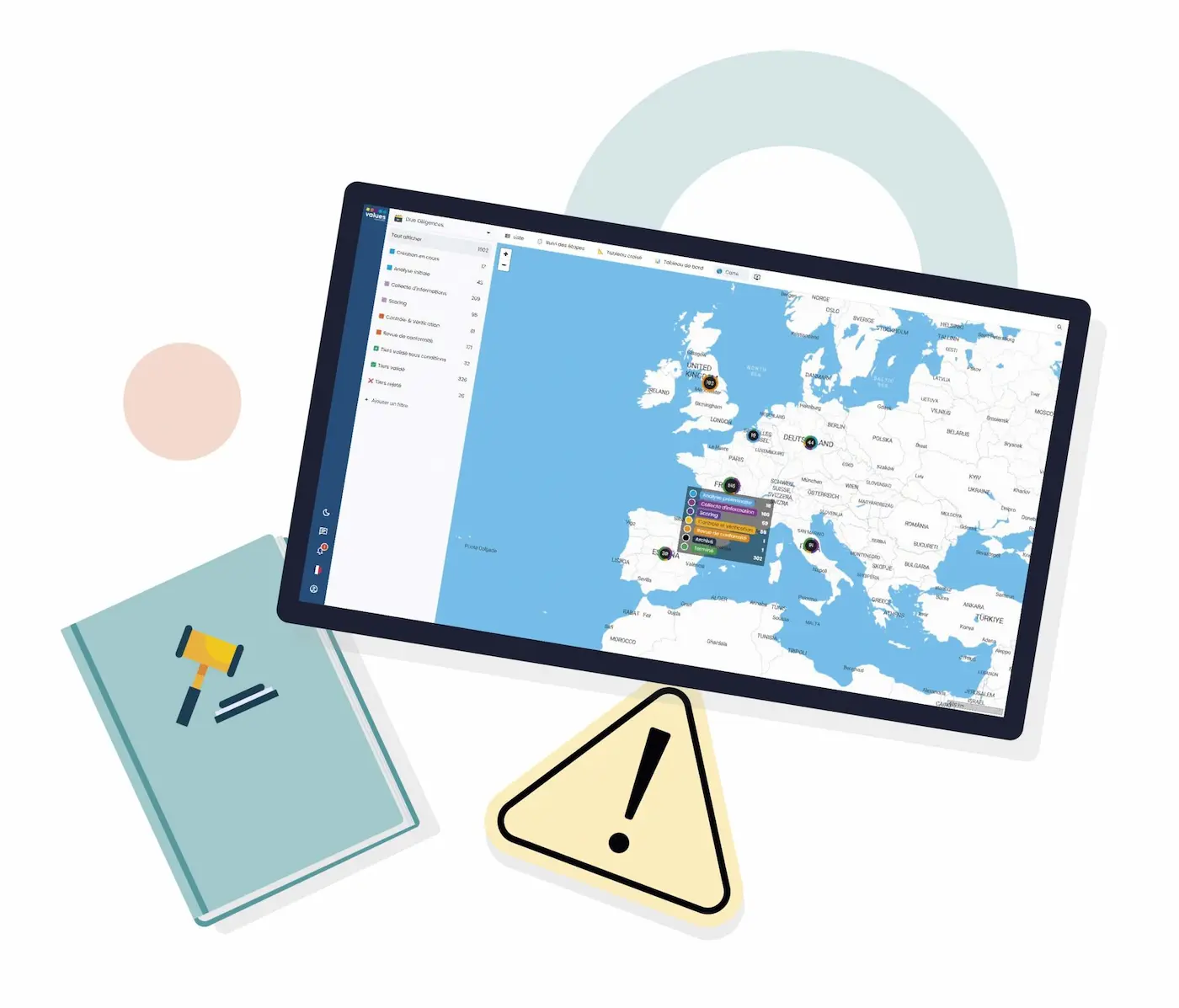
Risk management software should not be an isolated island within the company's IT infrastructure. It must be able to integrate harmoniously with other systems (such as ERPs, CRMs, etc.) to provide a consolidated view of risks across different business functions.
Complex and difficult-to-use software can become an obstacle to successful adoption. Ease of use and an intuitive user interface are key criteria to ensure that our software will actually be used by the relevant teams.
The objective is to centralize within a single application, customized to your challenges and allowing you to directly and easily access the data essential to your activity. This includes your repositories and procedure guides, data related to risk assessment, mitigation measures, control plans, audit reports, and all data presented via clear and insightful visualizations, enabling you to strengthen your analyses and communication.
Our technical support ensures quick responses to your issues. Prior training will enable your users to ensure the best possible handling of the risk management tool.
Given that risk management software will process sensitive information, our solution complies with the strictest security standards and helps your organization remain compliant with current regulations and market best practices.
Every administration or company has unique risk management needs. Our risk management software offers a high degree of customization to adapt to your specific needs. It is fully scalable to support the growth and evolution of your structure.
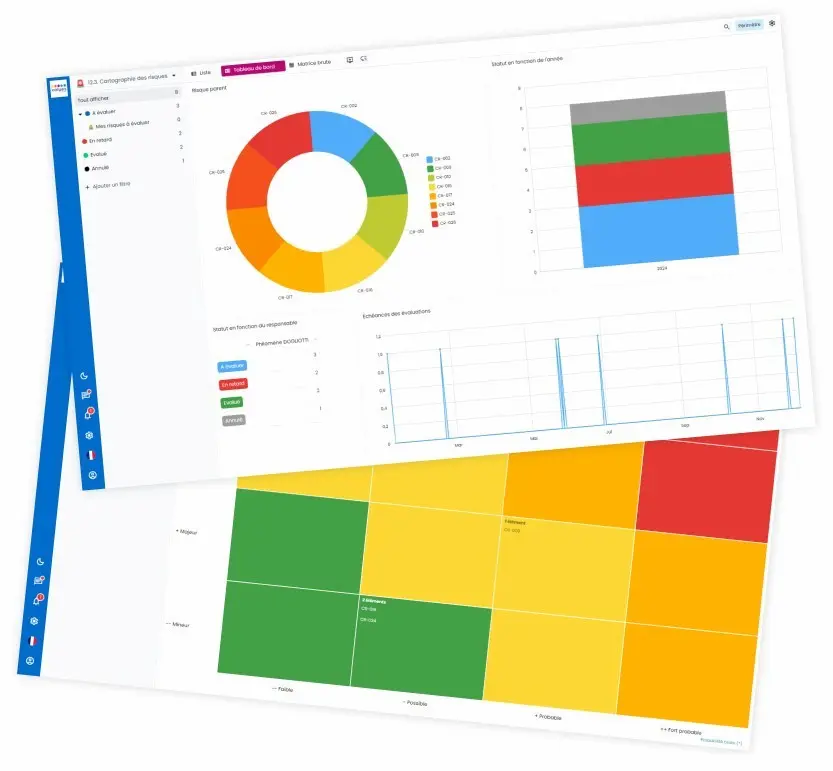
Our software provides effective ways to identify and assess risks with the risk mapping module, allowing classification based on their severity and probability. You can then use this basis to guide, structure, and manage associated action plans.
Our software allows you to easily plan and manage your control plans and specific actions to be implemented, according to the characteristics specific to your internal control framework and your objectives.
You can contextualize the framework of evaluation or self-evaluation supports related to your activity to solicit your various stakeholders and evaluate responses via the personalized definition of your scoring scale and method.
Our risk management software allows you to formalize your audit plan (organizational universe, risk universe, planning) and to prepare each of your internal audit missions: collection of preparatory data, analysis of collected data, associated evaluations (gross and net risk assessments, mitigation devices), and organization of the work program.
It allows processing the results from the field phase up to the closing meeting support, the audit report, as well as the recommendations plan and the associated action plan.
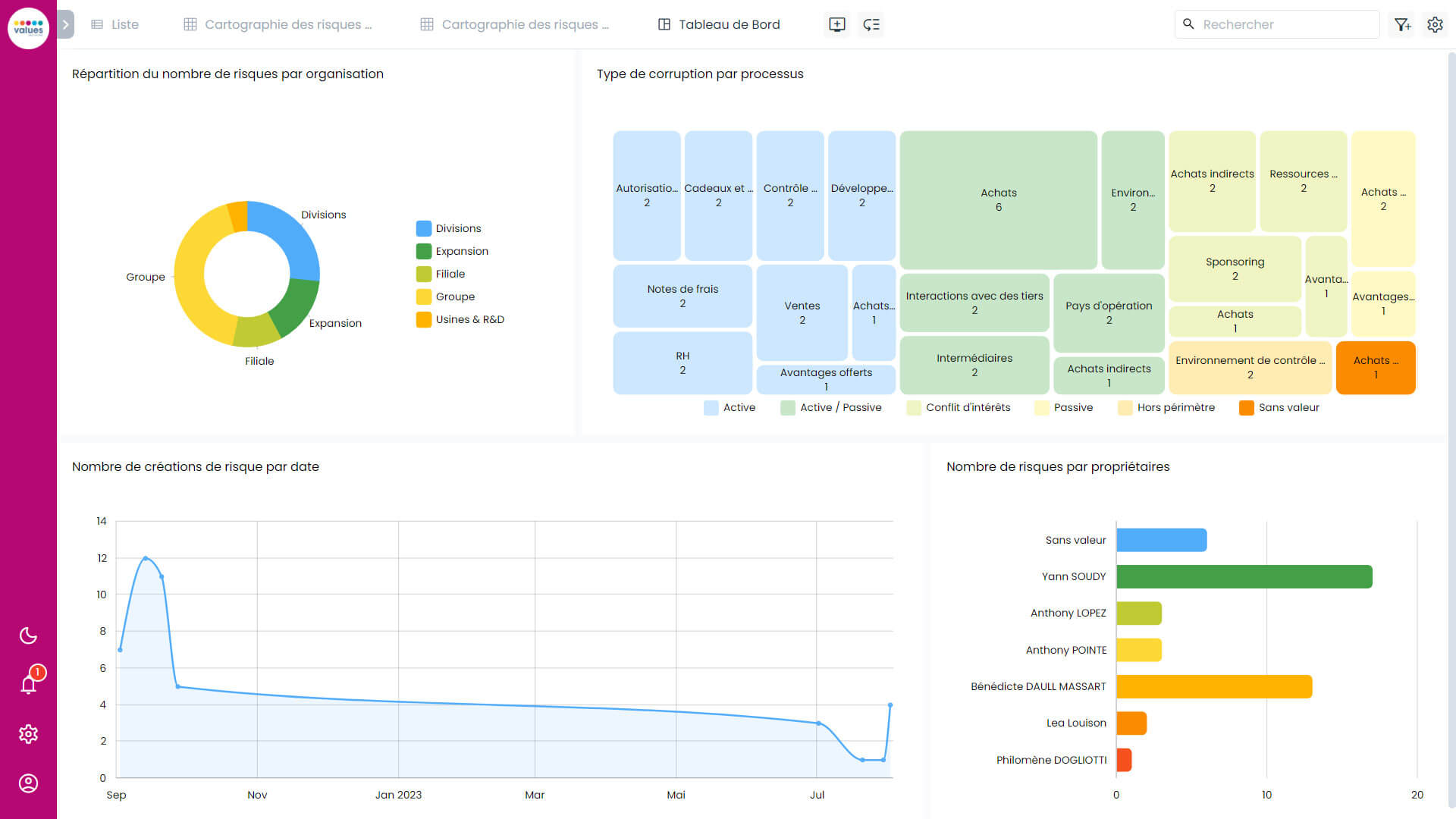
Intuitive dashboards and advanced reporting capabilities are available, essential for monitoring risks and effectively communicating information to stakeholders. Our software allows you to provide a 360° and always up-to-date view of the progress of work and the results obtained, with impactful restitution possibilities for each of your recipients, easy to understand and decipher, thanks to the range of features offered (data consolidation, zoom in/out capabilities, filters, dynamic evolution over time, etc.).
Monitoring and managing actions is essential: description of the action to be taken, responsible person and contributors, start and end dates, status, results obtained. Everything must be tracked for optimized management and performance.
Automating notifications and alerts prevents schedule deviations, ensures adherence to the overall timeline, and encourages the involvement of various stakeholders in the work.
Working within a centralized and shared environment allows everyone to access real-time updated information. The involvement of contributors is enhanced by the automation of task assignment and notifications, thereby reducing time-consuming tasks. This approach also fosters communication between different stakeholders and strengthens their commitment.


"A real pleasure to work with you on our projects"
Companies, regardless of their size or sector, face a multitude of risks ranging from internal threats, such as fraud or technical failures, to external uncertainties like regulatory changes or natural disasters. Poor risk management can lead to disastrous consequences, including significant financial losses, damage to reputation, or even cessation of activity. Conversely, effective management not only minimizes risk exposure but also improves productivity and security.
It promotes better governance and ensures compliance with applicable regulations, thereby strengthening stakeholder trust. Furthermore, it helps identify and exploit strategic opportunities, contributing to the sustainable development of the company. Adopting collaborative and customizable risk management software automates and simplifies this complex process. These solutions offer a clear overview of risks through advanced features such as risk mapping, periodic assessment, and real-time monitoring.
Thus, they become an indispensable tool for any leader concerned with securing their business against market uncertainties and ensuring its sustainability.
These risks could threaten their objectives, projects, and operations. By providing a structured framework for risk analysis, these tools enable companies to make informed decisions and plan proactive strategies to minimize negative impacts.
This software framework allows organizations and communities to dissect and examine from all angles the multiple facets of risks to which they are exposed. Thanks to advanced assessment tools and complex algorithms, the software identifies, quantifies, and prioritizes risks with surgical precision, thus offering a complete overview of potential threats.
But the true power of our risk management platform lies in its ability to monitor the evolution of risks in real-time. Like a sentinel, the application scrutinizes the slightest warning signs of changes likely to alter the risk landscape. Thanks to reporting and data visualization features based on datavisualization, risk managers have a real-time dashboard allowing them to monitor and understand emerging trends and thus anticipate potential future risks.
But beyond simple risk identification and monitoring, our cloud-hosted software suite offers companies the means to effectively mitigate their impact. By relying on predictive models and advanced simulations, it proposes carefully developed proactive strategies to counteract threats and minimize the potential impacts of poor risk management. Whether through the implementation of preventive measures, the development of emergency plans, or the strategic reallocation of resources, companies and communities thus have a range of options allowing them to transform challenges into opportunities.
Our risk management software supports you in your goal of resilience and sustainability. By providing a structured framework for risk analysis, offering real-time visibility into evolving threats, and a configuration allowing you to prioritize expected actions in the risk management process, based on individual responsibilities/profiles.
The tool enables collaborative use and centralizes data among different team profiles, ensuring optimal risk control monitoring and offering proactive mitigation strategies. Our software solution allows organizations to make informed decisions and navigate with confidence in the turbulent waters of the business world.
We recently published a detailed article on our blog that guides you step-by-step on implementing risk management software in your company or administration.
From initial planning to team training and practical implementation, this article offers a comprehensive overview of the process, along with practical advice to ensure the success of your compliance. To learn more, consult our article here.
Risk management software is an application designed to help companies identify, analyze, assess, and manage potential risks that could compromise them. It automates data collection and risk analysis processes and provides tools for monitoring and reporting, thereby facilitating strategic decision-making and compliance.
To choose the best risk management software, first assess the specific needs of your company or administration. Consider necessary features such as risk mapping, internal audit, rights management, and data security. Also, ensure that the software can integrate with existing systems, offers an intuitive user interface, and meets the compliance and security requirements of your sector.
Risk analysis tools vary depending on sector specificities and may include risk mapping software, risk assessment and internal control tools, real-time monitoring platforms, and early warning systems. These tools allow for quantifying and prioritizing risks.
There are several types of risk management, including strategic, operational, financial, and compliance risk management. Each type focuses on different aspects of the company or administration and requires specific strategies and tools to identify and mitigate associated risks.
A risk management system is a coordinated set of processes and technologies used by public or private organizations to systematically identify, analyze, assess, monitor, and reduce risks. This system ensures that management decisions take potential risks into account, thereby improving the resilience and stability of the company.
To create a risk management plan, start by identifying potential risks that could affect your company. Then, assess their impact and likelihood. Develop mitigation strategies for priority risks, assign responsibilities, and establish procedures for monitoring and reviewing the plan. Continuous communication and stakeholder training are also essential.
Key steps for risk assessment within a company or public administration include risk identification, risk analysis to determine their severity and probability, evaluation to prioritize risks based on their potential impact, and finally, the implementation of measures to manage or mitigate risks. Periodic re-evaluation is crucial to ensure that the risk management plan remains relevant and effective.
An application, or risk management software, plays a crucial role by providing the necessary tools for constant monitoring and rapid response to incidents. It centralizes risk data, automates reporting processes, and offers collaboration features that improve communication and consistency in risk management across the public or private organization.