
Successful Third-Party Assessment: Digital Solutions and Best Practices

While third-party assessment is a strategic priority, its implementation often remains complex. Nearly two-thirds of companies, local authorities, and government agencies still struggle to structure an effective assessment framework. Data volume, risk complexity, partner diversity, time-consuming and repetitive tasks, requirement for comprehensiveness, lack of resources…: the obstacles are numerous.

Digitalization provides a concrete and pragmatic solution to overcome these challenges. However, selecting the right tool for your needs and objectives is essential.

Discover the available software and best practices to follow for fully successful third-party assessment and to promote the image of an ethical and responsible company, local authority, or government agency.

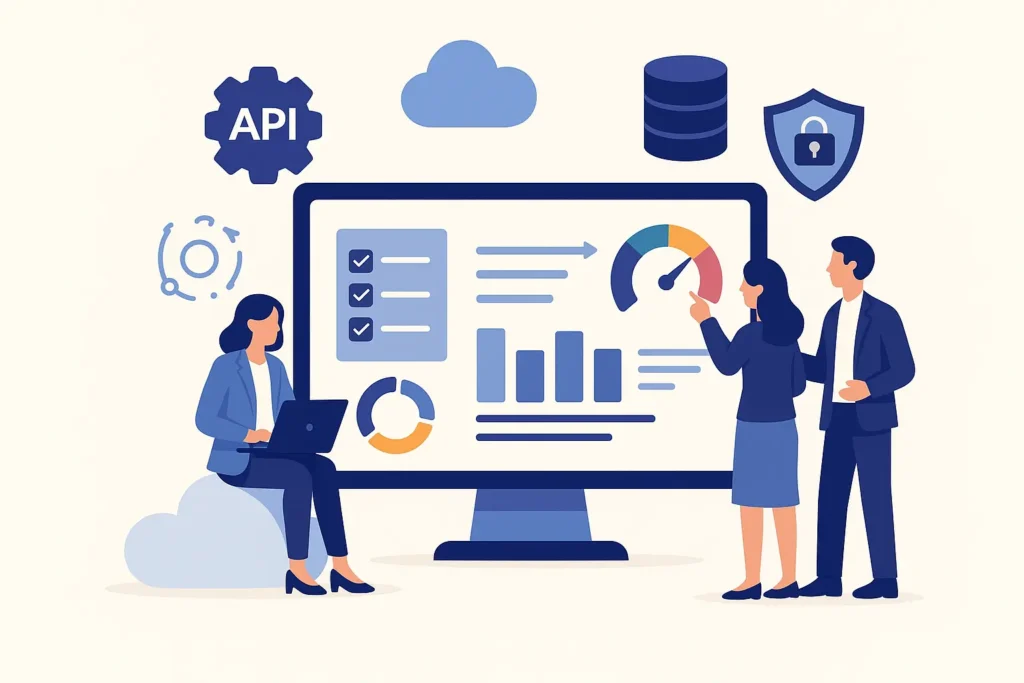
Vector illustration of a digital dashboard with charts and collaborators, surrounded by digital icons, symbolizing third-party assessment tools and best practices.

Digitalizing Third-Party Assessment

For many companies, local authorities, and government agencies, assessing third-party integrity remains a challenge. The volume and diversity of partners, risks, and data are discouraging. Digitalization removes this obstacle. Capable of transforming massive volumes of information into useful indicators, software and digital tools simplify and enhance the reliability of the third-party assessment process.

What Tools for Third-Party Assessment?

The market offers numerous tools for third-party assessment and associated risk management. However, there is no universal solution. Choosing third-party assessment software depends on several criteria: the organization’s specific needs, its IT maturity, the complexity of its third-party network, its risk exposure, and its budget.

Some companies, local authorities, or government agencies prefer lightweight and specialized software offered in SaaS mode (software as a service), which is faster and less expensive to deploy.

Others prefer a more comprehensive approach to risk and compliance, with the addition of complementary modules (risk mapping…), or integrated platforms for Third-Party Risk Management (TPRM) or GRC (Governance, Risk & Compliance).

The effectiveness of third-party assessment relies on access to reliable and up-to-date information. Through API interfaces, solutions connect directly to internal and external databases:

🔍 Screening Tools

They continuously collect information on third-party integrity by relying on recognized sources such as international sanctions lists, politically exposed persons (PEP) databases, judicial, commercial, or tax registries, the press, rating agency reports, etc. The alerts sent enable real-time updates of the third party’s risk profile and mitigation and due diligence measures.

🔗 Integration with Internal Systems

Connection to existing tools – such as ERPs (procurement and finance management), CRMs (customer relationship management), or procurement or public procurement platforms – ensures data consistency and uniqueness, as well as automatic updates from screening. The organization can thus track the third party’s lifecycle, from relationship initiation to contract closure.

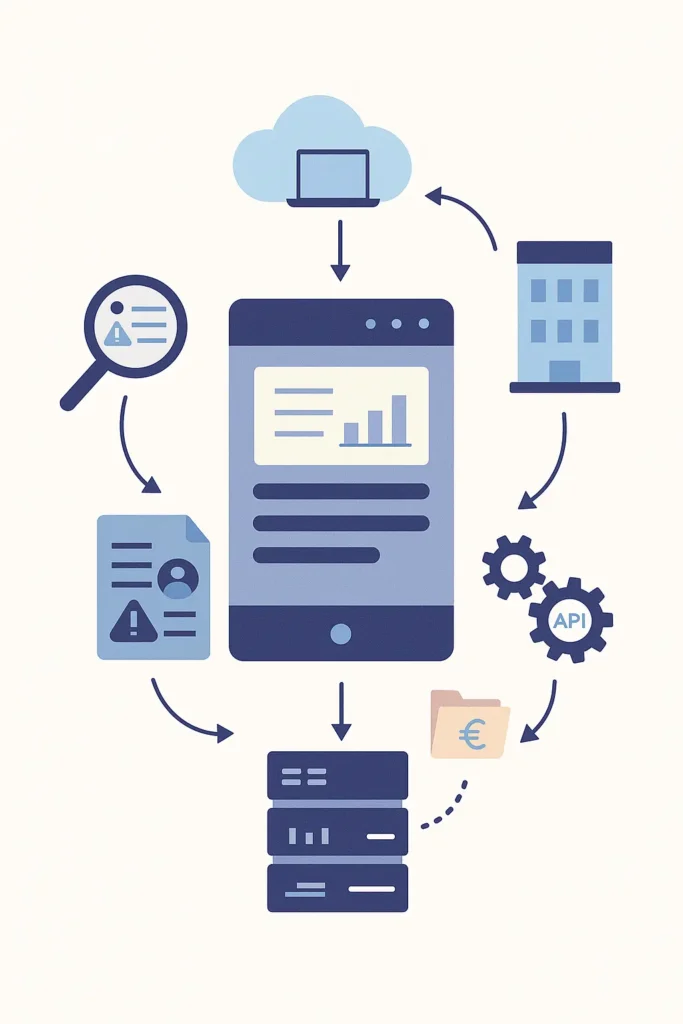
Vertical vector illustration representing different digital third-party assessment tools (SaaS, TPRM/GRC, screening, API integration).

Key Features of Third-Party
Assessment Software

Digital third-party assessment solutions offer a wide range of features that enhance reliability, accelerate processes, and improve overall management:

All partner information is consolidated in a single, accessible, and up-to-date repository.

Connection to external and internal databases ensures continuous monitoring, analysis, and real-time updates of risk profiles.

Automation of assessment process steps (collection, validation, periodic reviews, escalation system) ensures a rigorous and traceable process.

Automated and real-time calculation of risk scores enables continuous updates of risk mapping and dynamic third-party assessment, based on multiple criteria (financial, regulatory, operational, ESG, etc.).

Immediate notifications in case of critical changes to a third party’s profile make the company, local authority, or government agency agile and responsive.

Clear and concise visualization of indicators facilitates analysis, decision-making, and risk management oversight.

Collaborative features (role management, comments, action histories) facilitate teamwork and traceability.

Synchronization with ERPs, CRMs, and other internal software ensures data consistency and updates.

By automating time-consuming tasks, such as creating and updating identification records or detecting duplicates, the tool reduces human errors.

Tracking features enable real-time management and adaptation of due diligence and risk mitigation measures.

The software enhances security through fine-grained access rights management, action traceability, and automatic archiving.

Benefits of Digitalization with Third-Party Assessment Software

Beyond technical and administrative aspects, digital solutions offer real gains at all levels: operational, organizational, and strategic.

They help achieve the high standards recommended by the French Anti-Corruption Agency (AFA) in terms of documentation, traceability, and reliability.

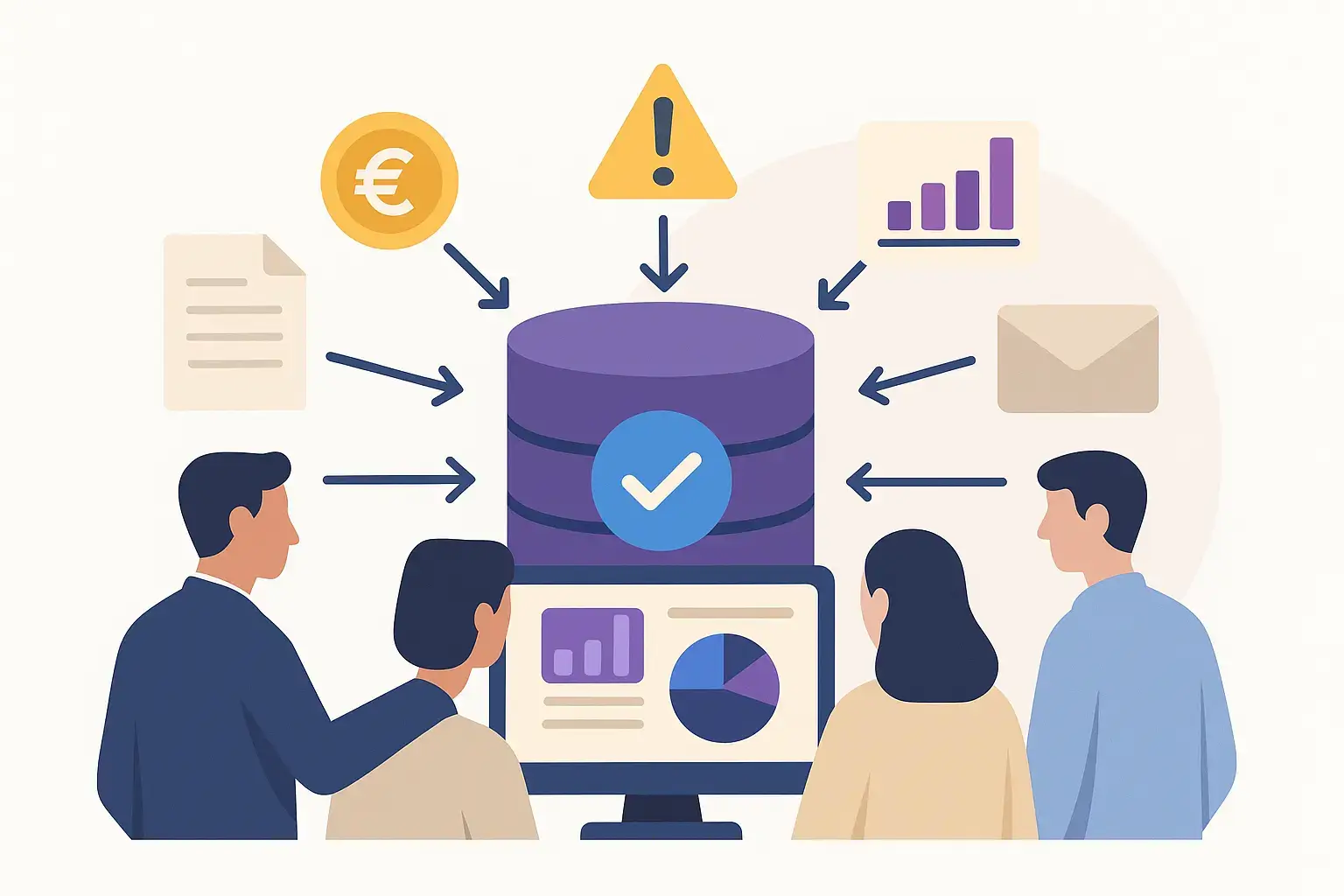
Illustration vectorielle horizontale d’une base de données centralisée connectée à des documents, finances et alertes, symbolisant une source d’informations unique et fiable.
A Single, Reliable, and Secure Source of Information

Through data centralization, teams have a single, secure access point to all information related to a third party: contractual documents, financial data, communication histories, regulatory or media alerts, etc.

This data consolidation promotes cross-functionality and collaboration between departments, reduces errors, and secures decision-making based on up-to-date, consistent, and verifiable information.
A Single, Reliable, and Secure Source of Information
Illustration vectorielle horizontale d’une base de données centralisée connectée à des documents, finances et alertes, symbolisant une source d’informations unique et fiable.
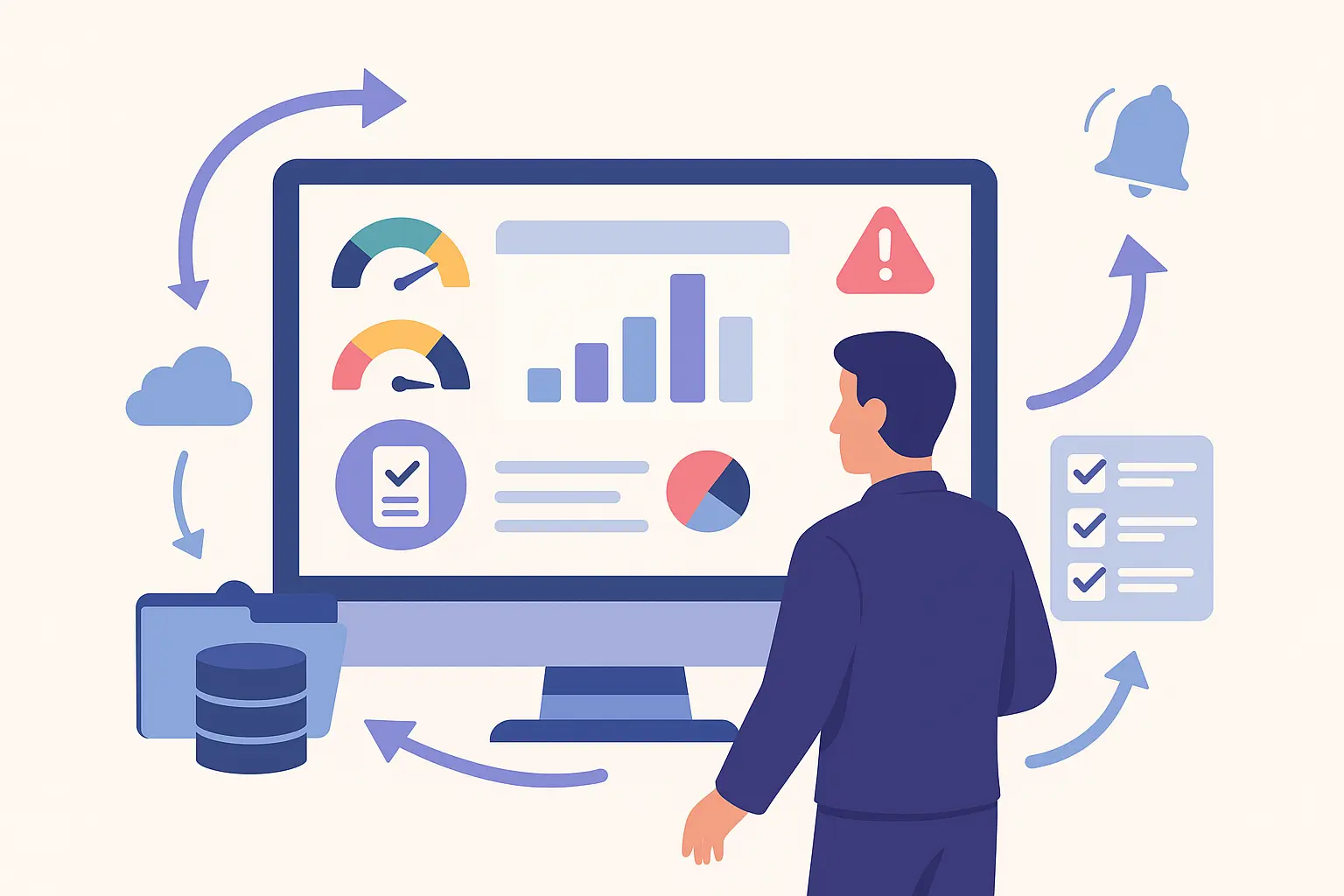
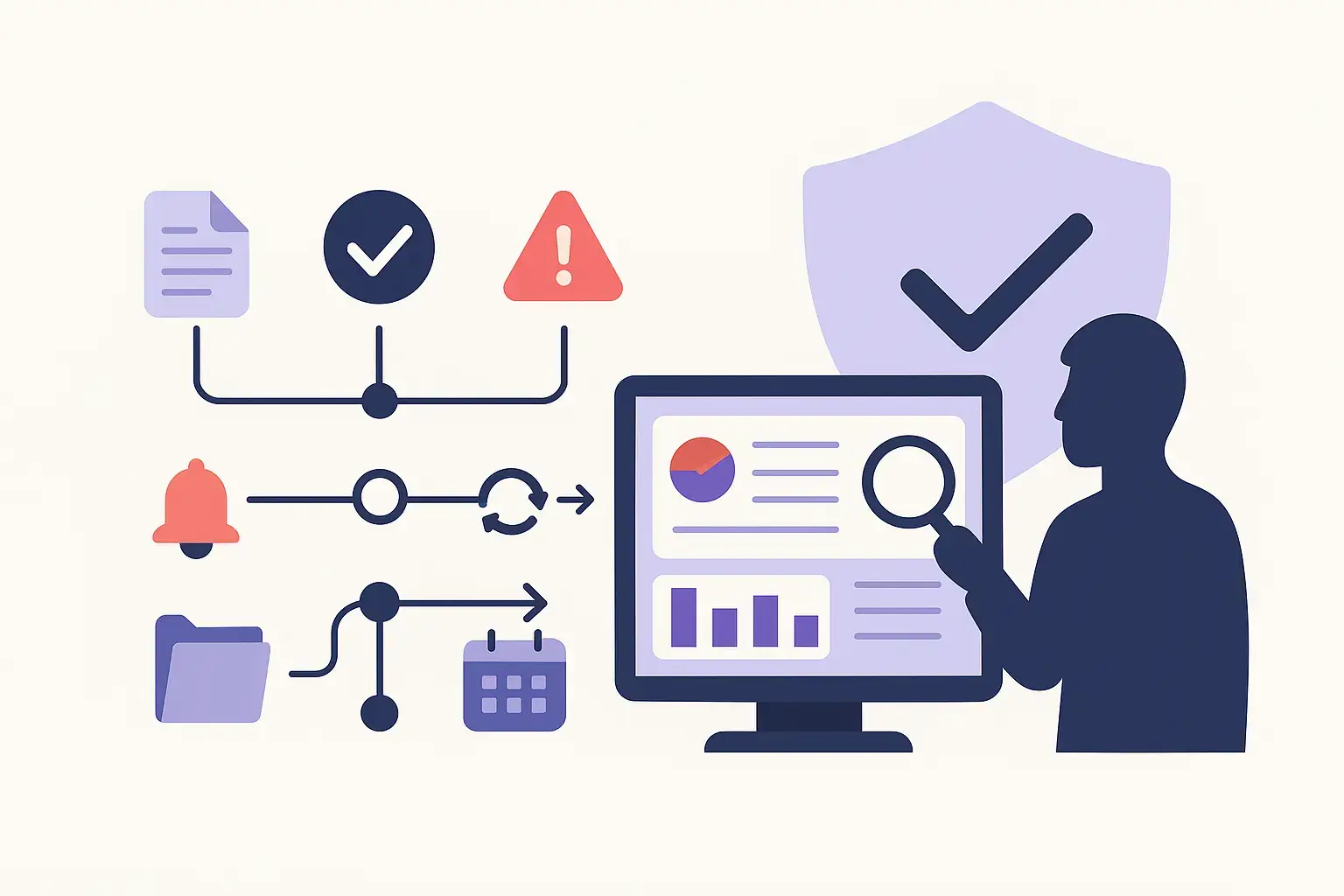
Illustration vectorielle d’un tableau de bord numérique avec indicateurs de risque, alertes et reporting, symbolisant un pilotage optimisé de l’évaluation des tiers.
Optimized Third-Party Assessment Management

Digitalization provides a clear and up-to-date overview of third parties and associated risks, through consolidated risk indicators, alerts, and dynamic reporting.

This visibility accelerates analysis and decision-making, facilitates real-time tracking of action plans, and promotes communication among stakeholders.
Optimized Third-Party Assessment Management
Illustration vectorielle d’un tableau de bord numérique avec indicateurs de risque, alertes et reporting, symbolisant un pilotage optimisé de l’évaluation des tiers.
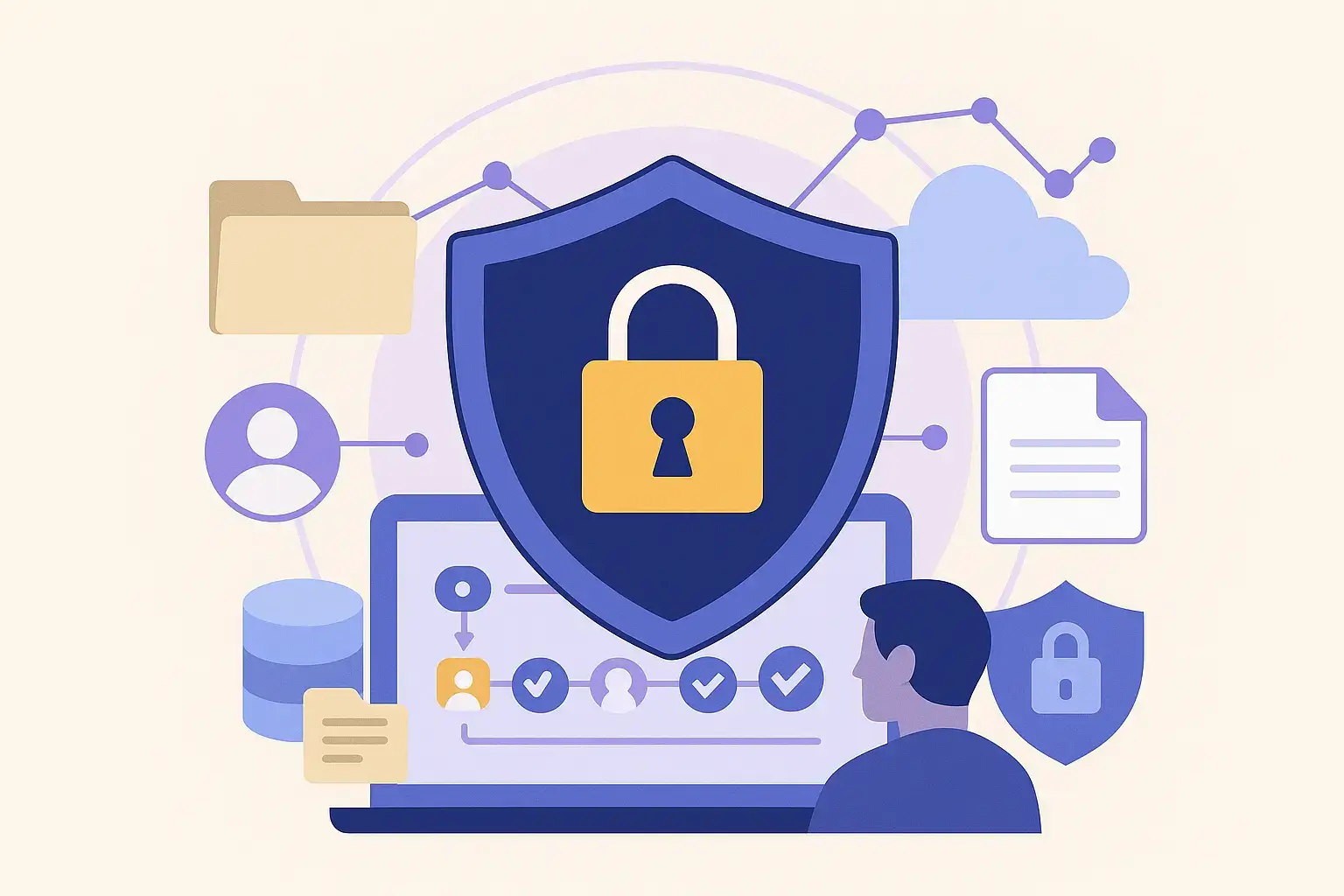
Illustration vectorielle d’une timeline numérique avec documents, validations, alertes et revues, symbolisant la traçabilité des tiers et des risques.
Guaranteed Third-Party and Risk Traceability

Digital tools automatically record and trace each step of the third-party integrity assessment process: information collection, internal validations, alerts received, measures implemented, periodic reviews...

This traceability reduces non-compliance risks. In case of audit or regulatory review, comprehensive documentation of third-party assessment enables the organization to justify its decisions, prove its ethics, and demonstrate the robustness of its risk management framework.
Guaranteed Third-Party and Risk Traceability
Illustration vectorielle d’une timeline numérique avec documents, validations, alertes et revues, symbolisant la traçabilité des tiers et des risques.
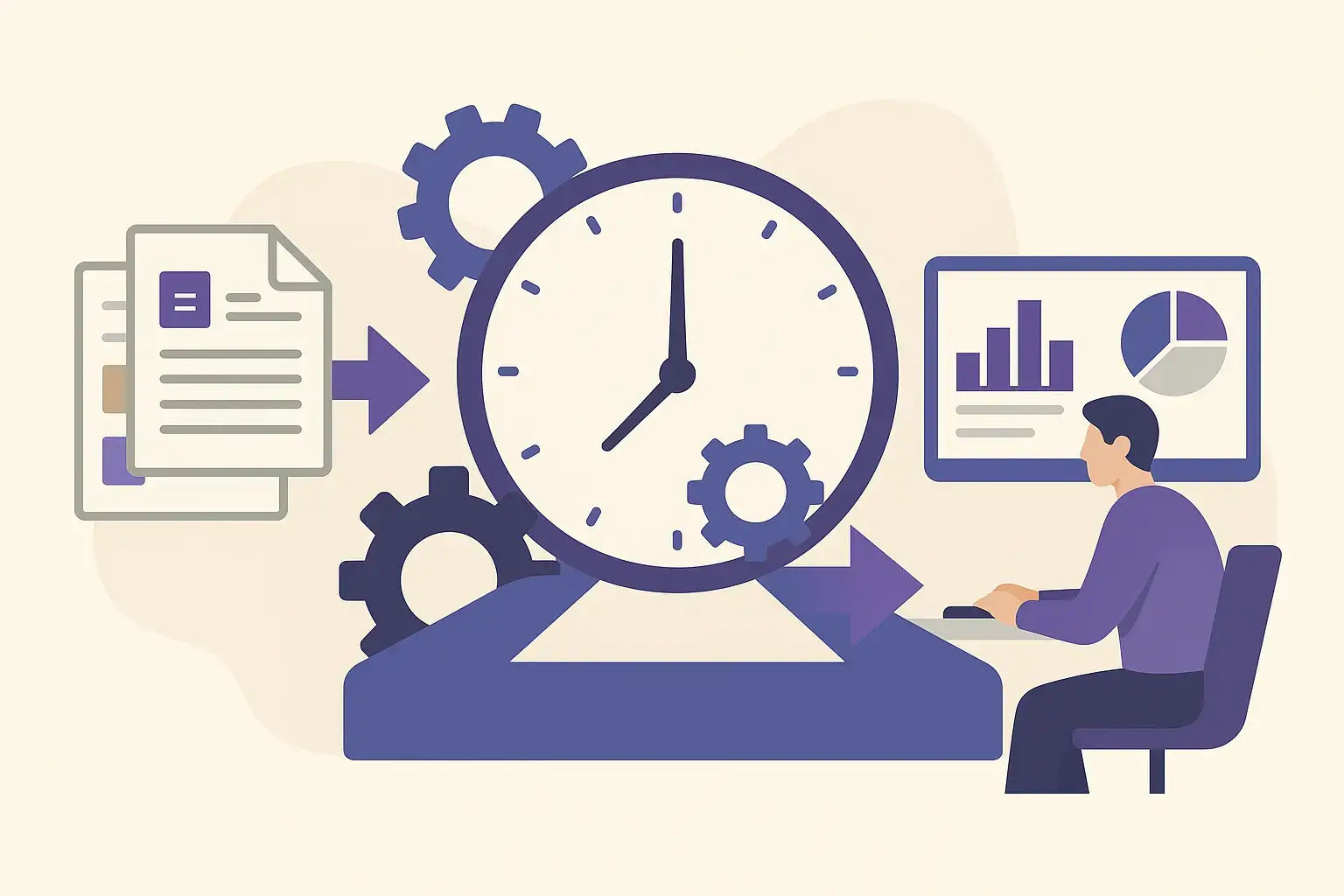
Illustration vectorielle d’un bouclier et d’un cadenas entourés d’icônes de données, symbolisant la protection renforcée des informations dans l’évaluation des tiers.
Enhanced Data Protection

New generations of employees are increasingly attentive to company values, local authorities, or government agencies.

By limiting third-party-related crises, third-party assessment protects the employer brand. Even without direct responsibility, the organization suffers the human consequences of third-party risks. Employee disengagement, increased turnover, and loss of attractiveness in the labor market compromise internal operations, growth, innovation, and organizational development.
Enhanced Data Protection
Illustration vectorielle d’un bouclier et d’un cadenas entourés d’icônes de données, symbolisant la protection renforcée des informations dans l’évaluation des tiers.
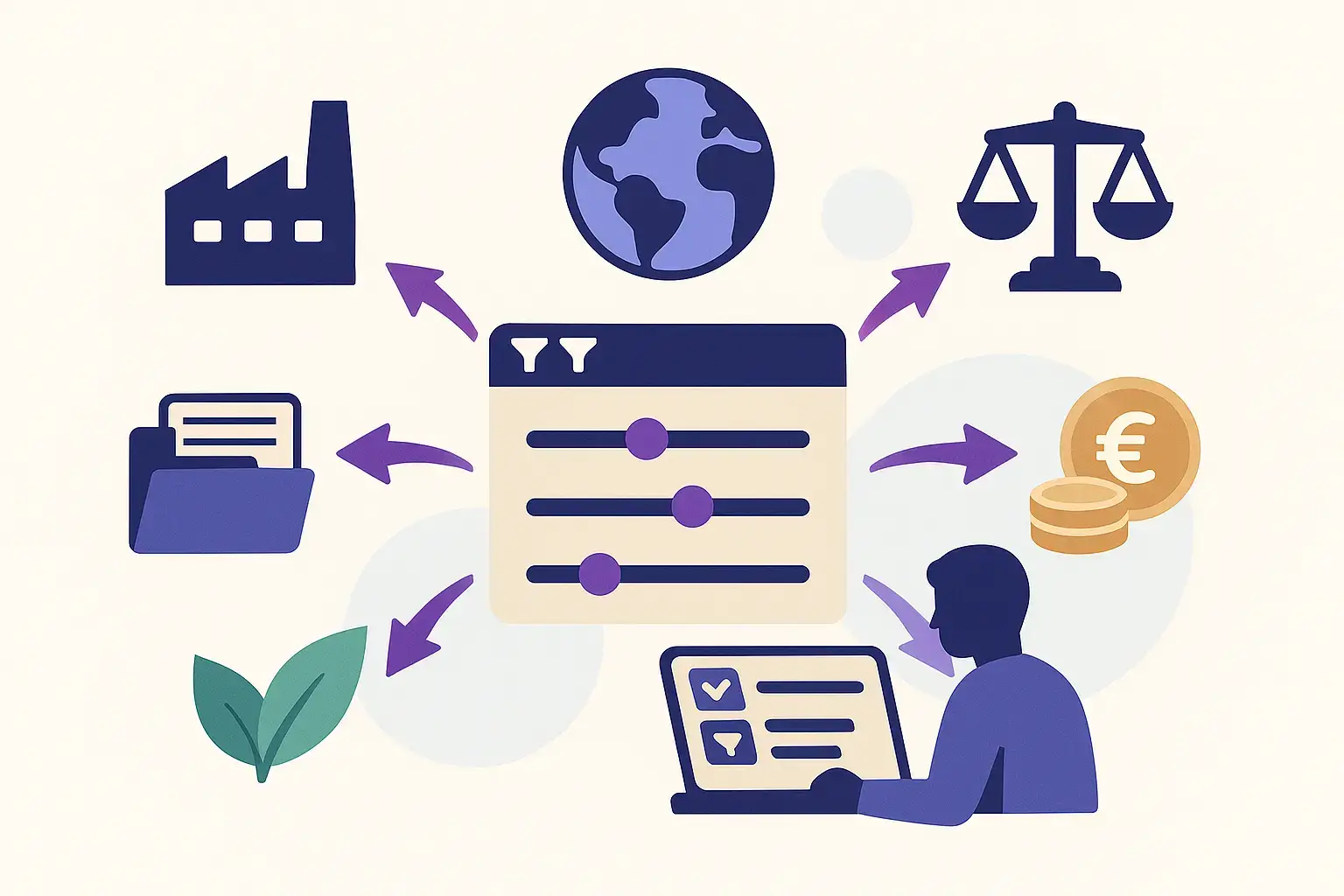
Illustration vectorielle d’une horloge entourée d’engrenages, reliant des tâches administratives automatisées à un collaborateur concentré sur l’analyse stratégique.
Time and Efficiency Gains

Too often perceived as operational or isolated, an incident with a third party may seem manageable. However, when combined, the legal, financial, human, and reputational consequences compound each other and create a vicious cycle, feeding off one another. This cycle can lead to extreme situations of bankruptcy, site closures, or institutional crises.

In this context, third-party assessment is a strategic issue that affects the sustainability, legitimacy, and even survival of the organization.
Time and Efficiency Gains
Illustration vectorielle d’une horloge entourée d’engrenages, reliant des tâches administratives automatisées à un collaborateur concentré sur l’analyse stratégique.
Illustration vectorielle d’un tableau de bord avec curseurs et icônes de filtres, symbolisant l’adaptation des logiciels d’évaluation des tiers aux priorités de l’organisation.
Adaptation to Organizational Priorities

Modular software enables customized third-party and associated risk assessment, aligned with the strategic priorities of the company, local authority, or government agency.
Adaptation to Organizational Priorities
Illustration vectorielle d’un tableau de bord avec curseurs et icônes de filtres, symbolisant l’adaptation des logiciels d’évaluation des tiers aux priorités de l’organisation.

Configuration allows adaptation of risk classification, risk thresholds, control levels, or assessment criteria based on the organization’s characteristics and the third parties with which it maintains relationships (industry sector, geographic location, risk exposure, laws and regulations…).

Best Practices for Successful Third-Party Assessment

Digitalization optimizes the structure and management of third-party assessment. However, to be fully effective, this process must be supported by sound organizational, human, and strategic practices.

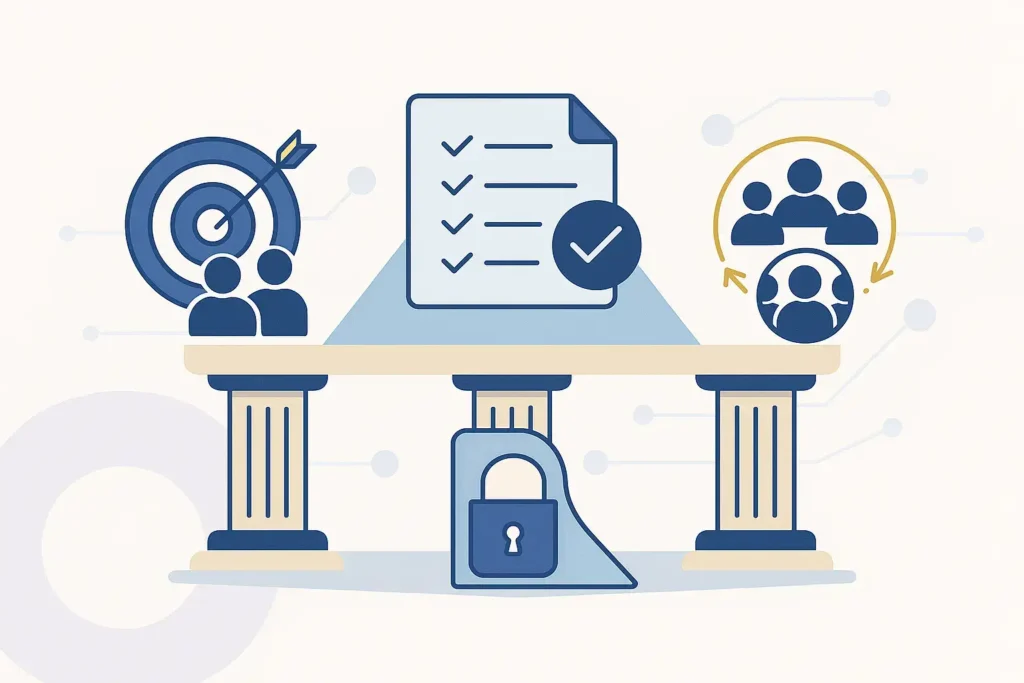
The Three Pillars of Successful Assessment

🎯 Committed Governance:
The involvement of management and elected officials determines the legitimacy of the process and the buy-in of all internal and external stakeholders.

📋 A Shared Reference Framework:
Defining common rules upfront (third-party typology, assessment criteria, risk levels, responsibilities) ensures consistency and effectiveness of the framework.

🤝 Collective Awareness:
Awareness-raising, training, and transparent communication promote ownership of the framework by operational teams.

Horizontal vector illustration representing three pillars: committed governance, shared reference framework, and collective awareness.

Discover Our Third-Party Assessment Solution

With its third-party assessment software, Values Associates offers an innovative solution to deploy a customized and flexible application in record time.

Without compromising your requirements, our tool integrates by default all fundamental third-party assessment features, and much more. No-code technology enables unlimited customization to tailor the tool to your company, local authority, or government agency.

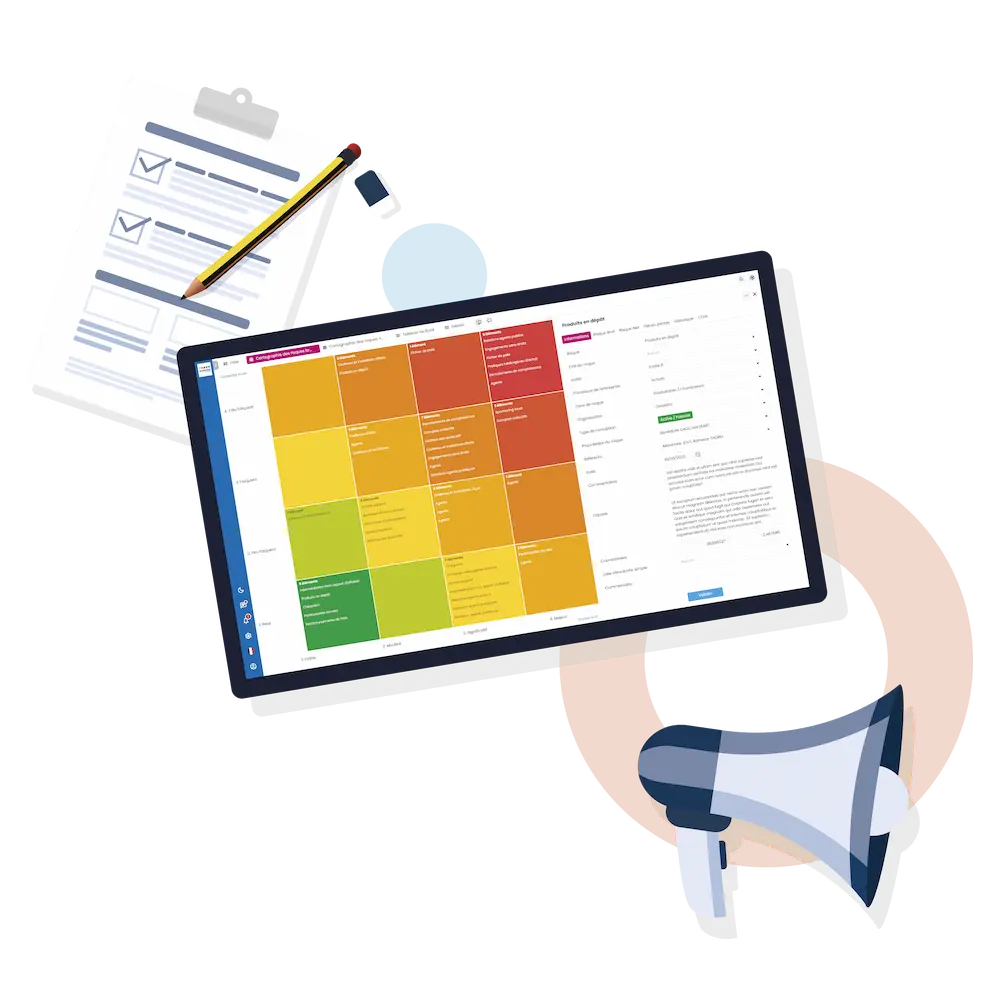
Illustration Sapin 2 software - Corruption risk mapping module